
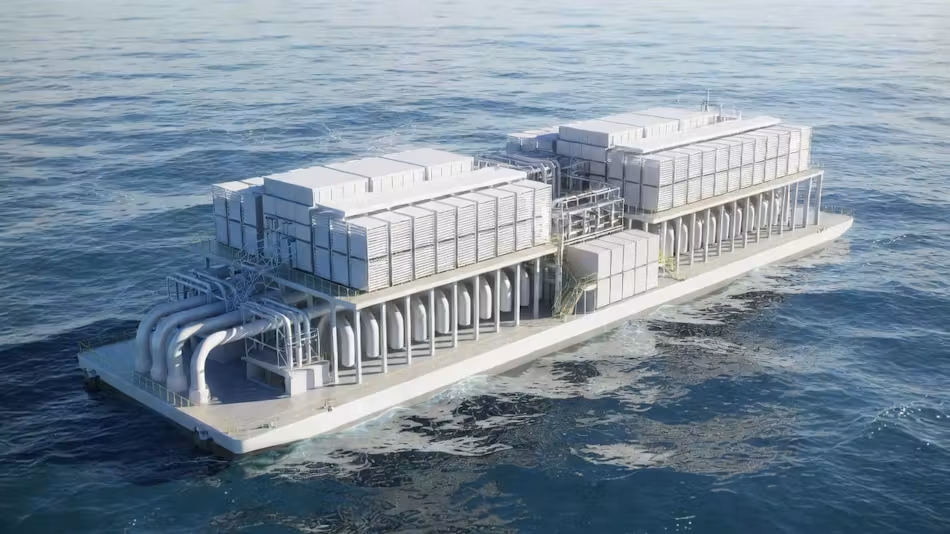
The rapid expansion of artificial intelligence and digital infrastructure has placed unprecedented strain on land-based power grids and urban real estate markets. As data center operators search for alternative locations to house massive computational loads, the marine environment has emerged as a viable and increasingly attractive frontier. In this context, classification societies and shipyards are rapidly developing sophisticated regulatory frameworks and engineering designs tailored specifically for non-traditional offshore assets. Recent announcements by ABS and Samsung Heavy Industries (SHI) regarding the advancement of 50-megawatt and 200-megawatt floating data center designs mark a significant milestone in bringing these complex facilities from concept to commercial reality, highlighting the growing convergence of maritime engineering and high-performance computing.
Regulatory Development
Developing robust regulatory frameworks for floating data centres requires bridging traditional maritime classification rules with land-based industrial and digital standards. Offshore structures housing sensitive electronics, massive power distribution units, and advanced thermal management systems do not fit neatly into standard vessel categories such as tankers, bulk carriers, or mobile offshore drilling units. Consequently, class societies must evaluate these novel assets against a hybrid matrix of applicable class rules and International Maritime Organization (IMO) regulations.
The recent announcements highlight a structured, two-pronged regulatory approach advanced through international collaboration. The first milestone involves a detailed design review agreement wherein ABS will conduct a comprehensive evaluation of SHI’s 50-megawatt floating data centre design against established class and regulatory benchmarks, building directly upon an earlier approval in principle (AIP) granted earlier in the year. The second milestone represents the formal granting of an approval in principle for a much larger 200-megawatt design, targeting the scale requirements of hyperscale operators. These milestones demonstrate how classification societies are proactively shaping the safety, stability, and operational criteria for offshore digital infrastructure long before commercial fabrication commences in the shipyards.
Applicability
These evolving engineering designs are primarily directed at hyperscale data center operators, energy providers, and marine developers seeking scalable computing solutions unconstrained by municipal zoning or land-based power grid limitations. By leveraging standard shipbuilding processes, these assets are designed for deployment in coastal waters, nearshore industrial zones, and sheltered marine environments where cooling water is abundant and power grid integration can be managed efficiently via subsea or coastal transmission cables.
The applicability of these class-approved designs extends across the entire marine and offshore supply chain. Shipyards benefit from utilising established construction methodologies and standardised assembly lines, while technology firms gain a reliable, pre-approved pathway to deploy modular data infrastructure. Furthermore, as offshore infrastructure projects continue to evolve, the integration of heavy industrial processing and IT plant onto floating barge hulls sets a vital precedent for other specialized, non-propelled marine assets seeking formal classification, statutory certification, and broad regulatory acceptance.
Effective Dates and Status
The current status of these floating data centre developments was formally confirmed in August 2026. These technological advancements follow a series of collaborative agreements stemming from the establishment of the Korea-U.S. Shipbuilding Partnership Center in Washington, D.C. While the initial 50-megawatt concept secured its approval in principle earlier in the year, the newly announced design review agreement moves that specific iteration into an active, rigorous verification phase. Simultaneously, the 200-megawatt design has achieved its initial approval in principle milestone, positioning both assets for subsequent stages of detailed engineering, safety studies, and eventual yard construction.
Requirements
Engineering a facility that combines heavy marine architecture with mission-critical IT infrastructure imposes exceptionally rigorous technical requirements. Unlike conventional commercial vessels, floating data centres must maintain extremely tight motion and stability limits to prevent micro-vibrations, hull flexing, and structural stress that could compromise delicate server racks, optical switching equipment, and high-density storage arrays.
Key technical considerations governed by class rules include:
- Structural integrity and sophisticated motion response analysis under varying sea states, wave spectra, and environmental loads.
- Advanced redundant power generation, fuel management, and high-capacity electrical distribution systems designed to guarantee uninterrupted uptime.
- Specialised marine cooling systems capable of handling the immense thermal loads generated by high-density artificial intelligence server clusters without disrupting local marine ecosystems.
- Robust fire protection, detection, and suppression systems tailored specifically for electrical, battery, and electronic fires within a confined offshore environment.
- Mooring and dynamic positioning configurations designed to ensure absolute station-keeping reliability over extended operational lifespans in coastal or sheltered waters.
Operational Impact
The transition of data center infrastructure to floating platforms introduces profound operational implications for both the maritime and technology sectors. By utilising standardised shipbuilding techniques, developers can significantly shorten construction timelines compared to custom-built land facilities constrained by local permitting delays. Furthermore, scaling capacity from 50 megawatts to 200 megawatts represents a fourfold expansion, specifically targeting the high-density power and cooling demands of modern artificial intelligence workloads.
Operationally, these facilities must function with high degrees of autonomy or semi-autonomy for extended periods. Maintenance regimes require specialized crew training, advanced robotics, or remote monitoring capabilities, ensuring that marine engineering systems, structural health monitoring sensors, and IT hardware can be serviced safely while afloat. The ability to deploy modular floating units also offers unparalleled commercial flexibility, allowing operators to relocate data assets dynamically to regions experiencing sudden surges in digital demand or localized power deficits.
Compliance Actions
Achieving regulatory compliance for floating data centres demands proactive, multidisciplinary collaboration between developers, shipyards, flag states, and classification societies throughout the entire asset lifecycle. Stakeholders must engage in comprehensive risk assessments, HAZID (Hazard Identification) studies, and rigorous plan approvals before any steel cutting begins.
Developers pursuing these advanced projects must ensure complete alignment with evolving class guidelines and statutory environmental frameworks. This includes carefully managing thermal and chemical discharges from cooling systems, complying with strict maritime environmental protection standards, and establishing robust cybersecurity protocols for remote marine operations. Engaging with flag states and local port authorities early in the conceptual design phase is equally critical to secure necessary operating permits, establish clear jurisdictional boundaries, and ensure seamless integration with local marine traffic management regimes.
Final Thoughts
The advancement of 50-megawatt and 200-megawatt floating data centre designs underscores the growing convergence between advanced maritime engineering and global digital infrastructure. As land-based resource constraints, grid bottlenecks, and environmental regulations intensify, the ability to build and classify complex offshore computing facilities provides a vital pathway for sustainable industry growth. Through rigorous design reviews, technical collaboration, and formal approvals in principle, classification societies continue to provide the essential technical foundation necessary to ensure that these novel assets meet the highest international standards of safety, reliability, and regulatory compliance.