
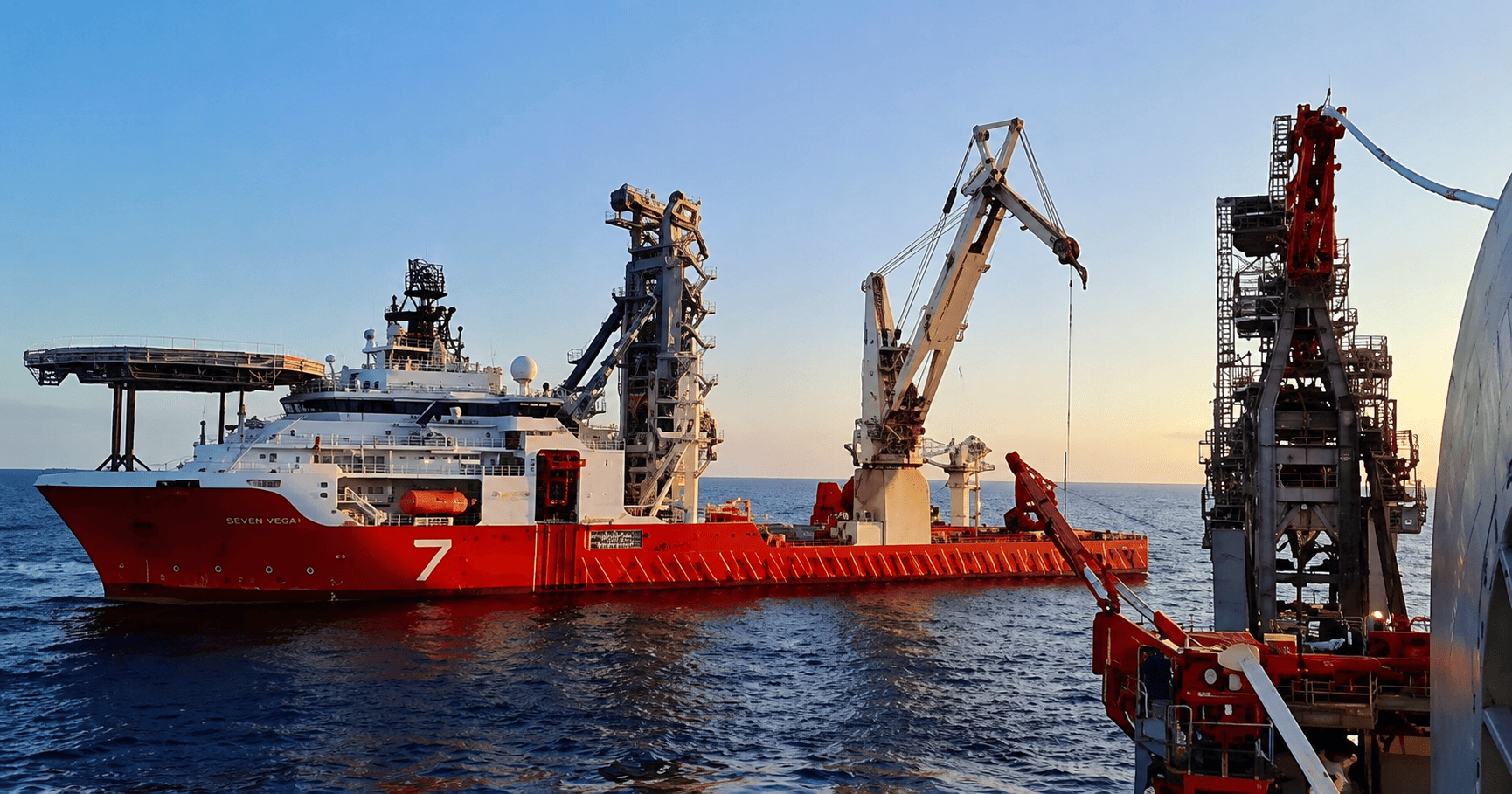
A significant subsea pipeline replacement award offshore Brunei signals continued upstream investment in Southeast Asian shallow-water fields and reinforces Subsea7's growing regional project backlog.
Subsea7 has been awarded a contract by Brunei Shell Petroleum for the engineering, procurement, construction and installation of subsea pipelines and riser systems at offshore assets in Brunei waters. The contract is valued in the $50m to $150m range, placing it in the category that Subsea7 publicly classifies as sizeable. Engineering and project management activities are already under way from the contractor’s Kuala Lumpur office, with support drawn from regional hubs in Perth and Paris.
The award is not a new relationship. Subsea7 and Brunei Shell Petroleum have worked together since at least 2018, and that continuity matters more than the headline figure. Repeat awards in subsea work are rarely accidental — they reflect demonstrated execution capability, local knowledge, and a client’s confidence that the contractor understands the specific demands of an asset base that has been producing for decades.
What the Project Involves
The scope centres on pipeline replacement rather than greenfield installation, which carries its own set of technical and logistical considerations. Offshore Brunei operates predominantly in shallow water — the project water depths are reported at up to 50 metres — which might appear straightforward by global subsea standards, but shallow-water pipeline replacement work in a mature field environment is rarely simple in practice.
Ageing infrastructure in long-producing fields typically means congested seabed corridors, legacy crossings, and pipelines in various states of cathodic protection and external condition. Replacement scopes require careful pre-engineering surveys, methodical removal or abandonment of the existing line, and precise installation of the new system within corridors that were never designed with future replacement in mind. Riser systems add further complexity, connecting the seabed infrastructure to fixed platforms that have their own structural constraints and inspection histories.
Subsea7 has not disclosed vessel assignments, pipeline lengths, or the offshore campaign schedule, which is standard practice at this stage of a project. The engineering and project management phase will define those parameters before any offshore mobilisation occurs.
Regional Significance and Brunei’s Upstream Position
Brunei’s offshore oil and gas industry, operated primarily through Brunei Shell Petroleum, represents one of the more mature producing environments in Southeast Asia. The sultanate’s upstream assets have been producing for generations, and the infrastructure supporting them reflects that history. Pipeline replacement programmes of this nature are not discretionary spending — they are operational necessity. Without functional subsea infrastructure, production cannot be sustained, and in a mature field context, deferring replacement carries compounding risk: internal corrosion, external deterioration, and the increasing probability of unplanned outages that carry both safety and commercial consequences.
For the broader regional offshore market, this award is a useful indicator that Southeast Asian operators are continuing to invest in the integrity of existing assets rather than simply managing decline. That posture supports demand for EPCI contractors, survey vessels, inspection workboats, and the full chain of marine support services that a pipeline replacement programme requires.
Subsea7’s Expanding Backlog
This Brunei award does not stand in isolation. Subsea7 has been building a substantial backlog across multiple geographies in recent months. Earlier this year the company secured a major contract in the Barents Sea covering gas export infrastructure, a significant award from Petrobras for deepwater development work offshore Brazil, and installation scope for an independent operator’s development in the US Gulf of Mexico. The cumulative value of these awards across the year represents a considerable pipeline of committed work for the contractor’s vessel fleet and engineering workforce.
For shipping and offshore marine professionals, a contractor backlog of this scale has direct operational implications. Vessel scheduling tightens as the offshore campaign calendar fills. Anchor handlers, survey vessels, dive support vessels, and construction barges that serve these projects operate in a market where availability increasingly reflects committed project cycles rather than spot demand. Owners and operators in the offshore support segment should be watching contractor backlog growth closely — it is one of the more reliable leading indicators of near-term vessel demand.
Operational and Commercial Considerations
Several practical points are worth noting for those working in or around this project environment:
- Shallow-water EPCI in mature fields demands thorough pre-engineering. The cost and schedule risk in replacement work sits disproportionately in the survey and metrology phase, not the installation itself. Getting that phase right reduces surprises during offshore execution.
- Supply chain lead times for linepipe and riser components in Southeast Asia require early procurement commitment. Regional fabrication capacity exists but is not unlimited, and demand from concurrent regional projects can create competition for materials and manufacturing slots.
- Vessel availability in the Asia-Pacific offshore market can be tighter than it appears from global fleet statistics. Regional operators and support vessel owners should engage early with EPCI contractors on campaign scheduling.
- Repeat client relationships in subsea contracting carry commercial value beyond the immediate contract. They typically translate into preferred contractor status for follow-on scopes, early contractor involvement in future projects, and access to asset data that reduces pre-engineering costs on subsequent awards.
For marine insurers and P&I practitioners, pipeline replacement work in shallow water near existing infrastructure also warrants careful attention to the wreck removal and third-party liability provisions in the contractor’s marine policy programme. Congested seabed environments and the proximity of operating platforms elevate exposure relative to open-water deepwater installation.
Final Thoughts
A pipeline replacement contract of this scale in Brunei is, at its core, a maintenance of production story. Brunei Shell Petroleum is investing to keep mature assets performing, and Subsea7 — backed by a long-standing client relationship and established regional engineering infrastructure — is the contractor of choice to deliver it. That combination of incumbent knowledge and demonstrated capability is difficult to displace in competitive tender processes, and it reflects a commercial reality that operators in mature fields understand well: continuity of contractor relationship reduces risk as much as it reduces cost.
For the wider offshore marine and shipping community, this project is a reminder that Southeast Asia’s upstream sector remains active and that shallow-water infrastructure renewal is generating genuine EPCI demand. As the global energy transition continues to generate debate about the future of fossil fuel infrastructure, the operational reality offshore Brunei — and in comparable mature fields across the region — is that existing assets require sustained investment simply to maintain current production levels. That investment flows through to vessel demand, port activity, supply chain logistics, and the full range of maritime services that support an offshore campaign from first steel to last weld.