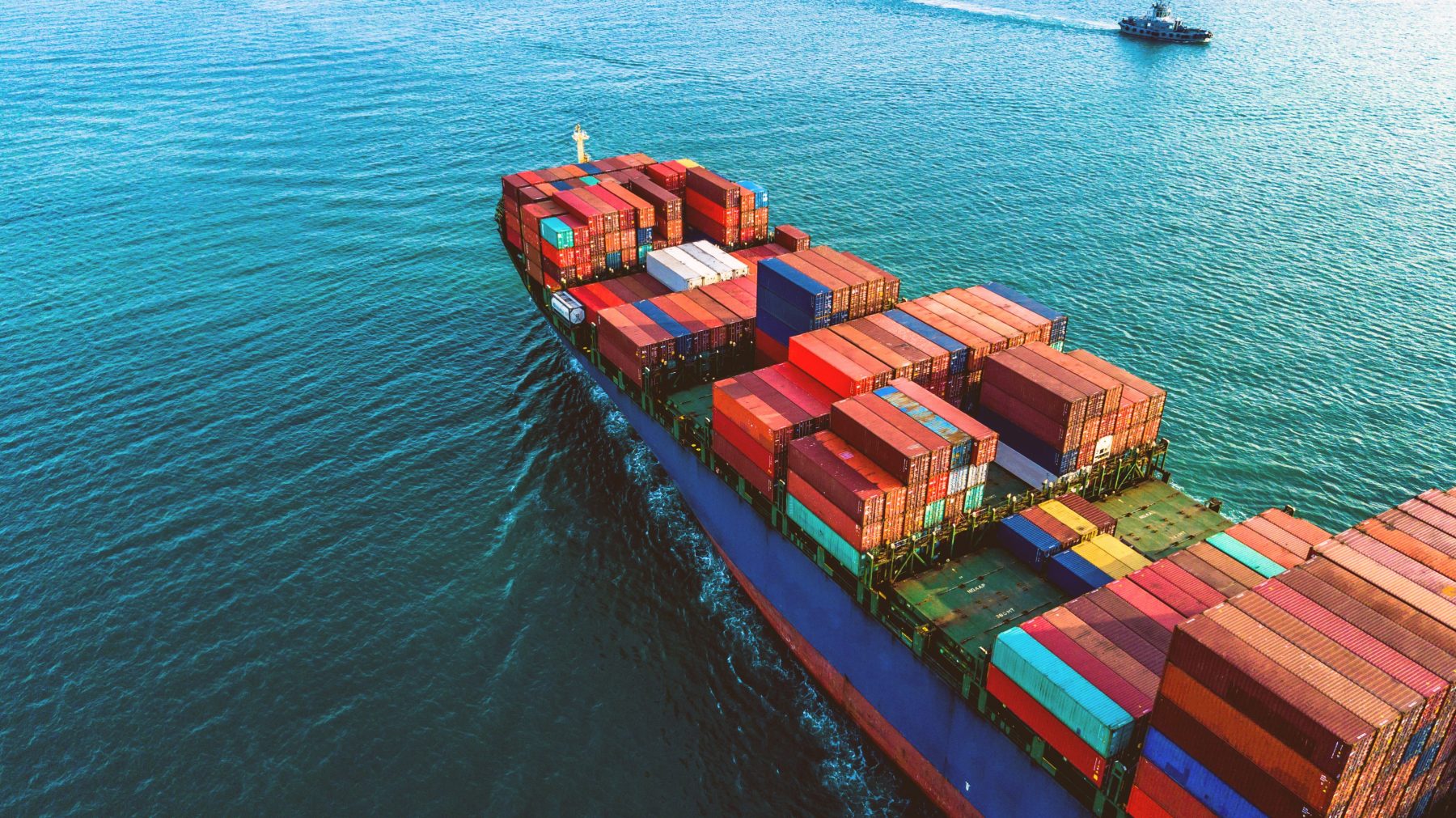
Major container carriers have dramatically increased owned tonnage since 2020, reshaping charter market dynamics and competitive strategy across the liner industry.
A structural shift has been quietly redefining the economics of container shipping over the past five years. The world’s major liner operators have moved decisively away from chartered tonnage and towards owned fleets, and the numbers behind that move are striking. According to analysis by Sea-Intelligence, global container carriers now own roughly 63% of their operated capacity — up from approximately 43% at the start of 2020. That is a twenty-percentage-point swing in less than five years, and it did not happen by accident.
Understanding what drove this shift, and what it means going forward, is essential for anyone with a stake in container tonnage — whether you are a shipowner with vessels on long-term charter, a tonnage provider assessing your renewal risk, or a charterer trying to read where the market is heading.
What Drove the Ownership Surge
The years following 2020 handed container carriers a combination of conditions they are unlikely to see again in the same form: pandemic-driven demand spikes, port congestion that effectively removed capacity from the market, and freight rates that in some trades reached multiples of their historical norms. Profits across the industry reached levels that would have seemed implausible to anyone who had survived the lean years of the mid-2010s.
Those extraordinary profits created the capital base for an equally extraordinary buying spree. Carriers who had historically relied on the charter market to flex their capacity found themselves sitting on cash reserves large enough to fund aggressive acquisition programmes. Secondhand values, while elevated, looked attractive relative to forward earnings. Newbuilding orders piled up at yards that had capacity to offer. The calculus for ownership had rarely looked more favourable.
But there was a more urgent commercial pressure at work beyond simple balance sheet opportunism. When the pandemic disrupted global supply chains, the container charter market tightened to an extent that caught many operators off guard. Vessel availability collapsed, hire rates climbed sharply, and carriers dependent on third-party tonnage found themselves unable to secure ships when they needed them most. The operational lesson was hard and immediate: if you do not own your capacity, you cannot guarantee your network when the market turns against you.
The Leaders and the Laggards
Not every carrier has moved at the same pace. The most aggressive shifts have come from operators who either had strategic reasons to grow quickly or who were structurally under-exposed to owned tonnage going into the cycle. MSC’s rise to become the world’s largest container line is inseparable from its relentless acquisition of secondhand tonnage across a wide range of vessel sizes. The strategy gave it flexibility that purely newbuilding-focused operators could not match, and it accelerated a process of fleet consolidation that was already underway.
At the other end of the spectrum, some of the industry’s largest and most established carriers have made only modest adjustments to their ownership ratios. This is not necessarily a strategic failure — carriers with already-large owned fleets, or those operating under specific financial or structural constraints, may have had less incentive or less room to move. But it does mean that their exposure to charter market conditions, and to the leverage that large tonnage owners can exert during periods of tightness, remains relatively unchanged.
One particularly notable data point is the emergence of at least one carrier operating its entire fleet on an owned basis. That represents a complete withdrawal from the charter market as an operational dependency — a position that carries its own risks in terms of fixed cost exposure during downturns, but which offers maximum flexibility when markets are disrupted.
Implications for Tonnage Providers and Shipowners
For independent shipowners and tonnage providers, the structural implications of this shift deserve careful attention. The traditional container charter market model — in which carriers used third-party vessels as a flexible supplement to a core owned fleet — depended on a rough equilibrium between carrier demand for chartered tonnage and the supply of vessels available from independent owners. That equilibrium is changing.
As carriers increase their owned share of operated capacity, the proportion they need to source from the charter market shrinks. In a strong market, this may not create immediate pain — demand for vessels can remain robust even as carrier ownership ratios rise. But the structural direction matters. Fewer charter fixtures means less liquidity in the market, which in turn affects how vessels are priced and how readily they are absorbed when they become available.
There are several specific risks for owners to consider:
- Long-term charter renewal risk is elevated for vessels coming off period employment with carriers who are actively growing their owned fleets. The carrier that previously renewed your vessel may now have owned tonnage to fill that slot.
- Older vessels and non-standard sizes face greater displacement risk as carriers prioritise modern, fuel-efficient owned tonnage to meet regulatory requirements under CII and the EU ETS.
- The secondhand values that made acquisition attractive for carriers have also increased the barrier to entry for smaller owners looking to build or renew their fleets competitively.
None of this means the independent container charter market disappears. Carriers will continue to need chartered tonnage for specific trades, for capacity buffers, and for niche size segments where owned fleet investment does not make sense at scale. But the market’s centre of gravity has moved, and owners who built their business models on the assumption that major carriers would always need significant charter cover should reassess that assumption carefully.
Commercial and Competitive Consequences for the Liner Industry
From a competitive standpoint, the ownership shift has reinforced the advantages of scale in a way that may accelerate further consolidation. Carriers with large owned fleets have lower variable costs per slot, greater freedom to deploy capacity strategically, and less exposure to hire rate volatility during market disruptions. They can also absorb downturns more comfortably by managing their own vessels rather than shedding expensive charter commitments.
This creates a feedback loop that favours the largest operators. The more capacity you own, the better positioned you are to gain market share during periods of disruption. The more market share you gain during those periods, the more revenue you generate to fund further owned fleet growth. Carriers who missed the ownership cycle of 2020 to 2024 may find it structurally harder to close the gap during the next period of elevated profitability, whenever that arrives.
For shippers and cargo interests, the implications are more nuanced. Greater carrier ownership of capacity does not necessarily mean more stable freight rates — rate volatility is driven by far more variables than fleet ownership structure. But it does mean that carriers have greater ability to manage capacity actively, which historically has translated into more disciplined supply management and less willingness to compete purely on price during market downturns.
Regulatory Overlay: Decarbonisation Changes the Ownership Calculus Further
The ownership shift is also interacting with the industry’s accelerating decarbonisation agenda in ways that will play out over the next decade. Carriers building owned fleets today are making long-term bets on propulsion technology, fuel type and operational efficiency. Those decisions will determine their CII ratings, their EU ETS exposure, and their ability to meet the IMO’s revised GHG targets.
Owned fleets give carriers direct control over these parameters in a way that chartered fleets do not. A carrier operating chartered vessels faces the complexity of negotiating emissions-related clauses with multiple counterparties, aligning bunker procurement strategies across vessels it does not own, and managing the reputational and financial risk of operating vessels whose environmental performance it cannot fully control. Ownership eliminates that complexity, even if it concentrates the capital risk.
For shipowners placing vessels on the charter market, the decarbonisation filter is becoming as important as the commercial terms. Vessels that cannot demonstrate competitive CII performance or clear pathways to compliance with upcoming fuel regulations will find an increasingly narrow market among carriers whose owned fleets are already pulling ahead on these metrics.
Final Thoughts
The movement of the global container fleet ownership ratio from 43% to 63% in roughly five years is not a footnote — it is a structural reconfiguration of how the liner industry organises itself. What began as an opportunistic response to extraordinary profitability and charter market tightness has hardened into a deliberate strategic posture among the carriers best positioned to sustain it.
For shipowners and tonnage providers, the honest assessment is that the charter market’s role as a structural necessity for major liner operators has diminished. That does not make independent ownership unviable, but it does require a clearer-eyed view of which vessel types, sizes and specifications will retain genuine demand in the charter market, and which are at risk of being progressively displaced by owned capacity.
For the liner operators themselves, the risk is the mirror image: owned fleets carry fixed costs that become burdens in downturns, and the vessels ordered or acquired at the peak of a profit cycle are not always the vessels best suited to the next phase of the market. The carriers who navigated the ownership shift with discipline — acquiring strategically rather than impulsively — will be better placed than those who simply bought whatever was available at whatever price the market demanded.
The charter market is not dead. But its architecture has changed, and the participants who recognise that earliest will adapt most effectively.