Introduction
Operating commercial tonnage through Central America’s principal interoceanic corridor requires continuous hydrological surveillance, particularly as climatic anomalies begin to dictate operational parameters. The Panama Canal Authority (ACP) has announced a fresh sequence of maximum authorized draft limitations affecting vessels utilizing its wider lock system. Driven by declining water levels in the critical freshwater reservoir of Gatun Lake, these measures form part of an ongoing institutional water management strategy designed to reconcile maritime transit demand with the meteorological pressures of a strengthening El Niño.
For shipowners, commercial operators, and navigation managers, these regulatory adjustments demand precise coordination. While the latest restrictions remain notably less severe than the historic curtailments witnessed during the 2023-24 drought cycle, they nevertheless alter payload calculations for large commercial tonnage. Understanding the operational, technical, and regulatory dimensions of these adjustments is essential for maintaining schedule integrity and safeguarding vessel stability during transit planning.
Regulatory development
The regulatory framework governing draft restrictions in the Panama Canal stems from the authority’s statutory mandate to manage, maintain, and protect the waterway and its surrounding watershed. Under local navigation regulations, the ACP holds the administrative and operational authority to alter maximum allowable drafts based on real-time and projected hydrological data from Gatun Lake and Alajuela Lake. These adjustments are formally communicated via official shipping advisories distributed to maritime stakeholders globally.
The administrative process relies on long-term predictive modelling linked to tropical Pacific weather phenomena. As meteorological agencies tracked the strengthening of the current El Niño event—with projections indicating a high statistical probability of persisting into early spring—the ACP initiated a proactive adjustment schedule. Rather than waiting for critical lake depletion thresholds to force emergency interventions, the authority has elected a stepped reduction path. This regulatory approach builds upon lessons learned from previous operational disruptions, embedding water conservation directly into the routine administration of the waterway.
Applicability
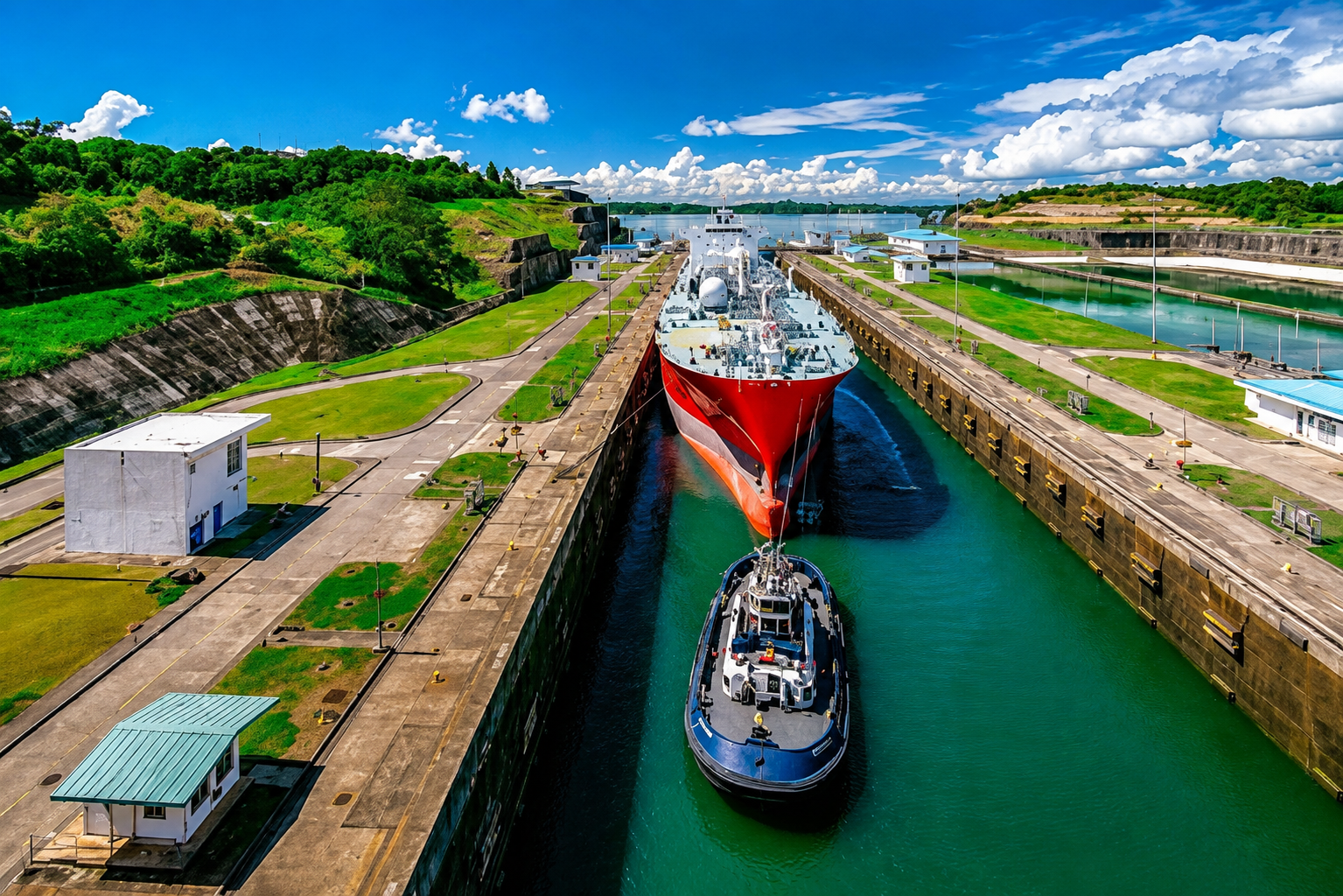
The newly promulgated draft restrictions apply specifically to vessels transiting the larger lock chambers, commonly designated as the Neopanamax locks. This category encompasses ultra-large container ships, liquefied natural gas (LNG) carriers, liquefied petroleum gas (LPG) carriers, and large bulk carriers that exceed the physical capacity of the historic Panamax lock system. Because these vessels possess substantial beam and depth dimensions, their buoyancy and displacement characteristics make them exceptionally sensitive to minor variations in freshwater depth.
Effective port call planning requires superintendents and vessel masters to cross-reference their specific ship particulars against the promulgated maximum drafts well ahead of arrival at the Atlantic or Pacific anchorages. Smaller vessels utilizing the original panamax locks face different operational constraints, but the macroeconomic consequences of Neopanamax adjustments ripple across global liner networks and long-haul bulk trades alike, influencing cargo intake capacity across multiple sectors.
Effective dates or status
The ACP’s phased implementation schedule establishes clear temporal boundaries for compliance. Following earlier reductions implemented earlier in the summer—which brought the maximum allowable draft down from initial seasonal baselines—the authority has scheduled two consecutive downward adjustments for late August and early September.
Specifically, the maximum authorized draft will be reduced to 48.0 feet (14.63 metres) effective August 26. This limit will remain in force for a brief window before stepping down further to 47.5 feet (14.48 metres) beginning September 3. These figures will remain operational until further notice, subject to subsequent advisories that may either relax or tighten the limits depending on actual rainfall patterns within the canal watershed over the coming months.
Requirements
Compliance with the promulgated draft limits is mandatory for all vessels seeking transit clearance through the Neopanamax locks. The maximum authorized draft is measured in tropical fresh water (TFW) corresponding to the density of Gatun Lake, which has a specific gravity of approximately 0.9954. Masters and chief officers must calculate their vessel’s actual draft accounting for water density, hogging, sagging, and trim.
Vessels presenting at the canal with a maximum draft exceeding the permitted limit face denial of transit until corrective action is taken, which typically involves discharging cargo locally—a logistically complex and expensive remedy. Furthermore, the canal authority requires rigorous pre-arrival reporting of maximum drafts, stability particulars, and distribution of deadweight. Navigational safety inspectors retain the right to verify drafts via physical readings or draft survey assessments prior to authorizing entry into the approach channels.
Operational impact
The primary operational consequence of tightening draft limits is the involuntary reduction of cargo carrying capacity. For a modern Neopanamax container vessel or dry bulk carrier, a reduction of half a foot or a full foot in allowable draft can translate into hundreds of TEUs of lost intake or thousands of tonnes of unladen bulk cargo. Operators must decide whether to accept lighter payloads per voyage, deploy additional tonnage to cover spilled cargo, or absorb the freight rate economics associated with disrupted scheduling.
Unlike the severe drought of 2023 and 2024—which forced deep draft limits down to 44.0 feet and slashed daily transit numbers from roughly forty vessels to the mid-twenties—the current administrative measures are designed to preserve daily transit volumes. By maintaining slot availability while trimming drafts, the ACP aims to prevent the massive vessel queues and multi-week delays that previously distorted international supply chains. Nevertheless, commercial operators must remain vigilant against potential secondary delays or booking restrictions if regional precipitation fails to meet baseline projections.
Compliance actions
To ensure flawless compliance and avoid costly transit delays, vessel operators and ship masters must execute a structured series of pre-arrival actions. Technical departments should update their stability software with the exact water density parameters of Gatun Lake and conduct rigorous deadweight surveys prior to loadport departure. Communication channels between the vessel, local shipping agents, and canal schedulers must remain active to track any sudden amendments to the advisory notices.
Chief officers must verify that arrival trim meets the strict requirements of the pilotage service, as improper trim can adversely affect manoeuvrability within the lock chambers regardless of midships draft compliance. Maintaining transparent operational data exchange with the ACP prevents administrative friction and ensures that transit permits are processed without contention upon arrival at the terminal approaches.
Final Thoughts
The implementation of fresh draft restrictions in the Neopanamax locks highlights the growing influence of macro-climatic variability on core maritime infrastructure. While the Panama Canal Authority has successfully avoided the catastrophic transit bottlenecks of previous years through advanced water conservation protocols and phased administrative adjustments, the underlying vulnerability of freshwater-dependent waterways remains a permanent consideration for global logistics. As climate patterns continue to test traditional operational tolerances, proactive hydrological management and meticulous voyage planning will remain essential disciplines for navigating the world’s vital maritime trade arteries safely and efficiently.