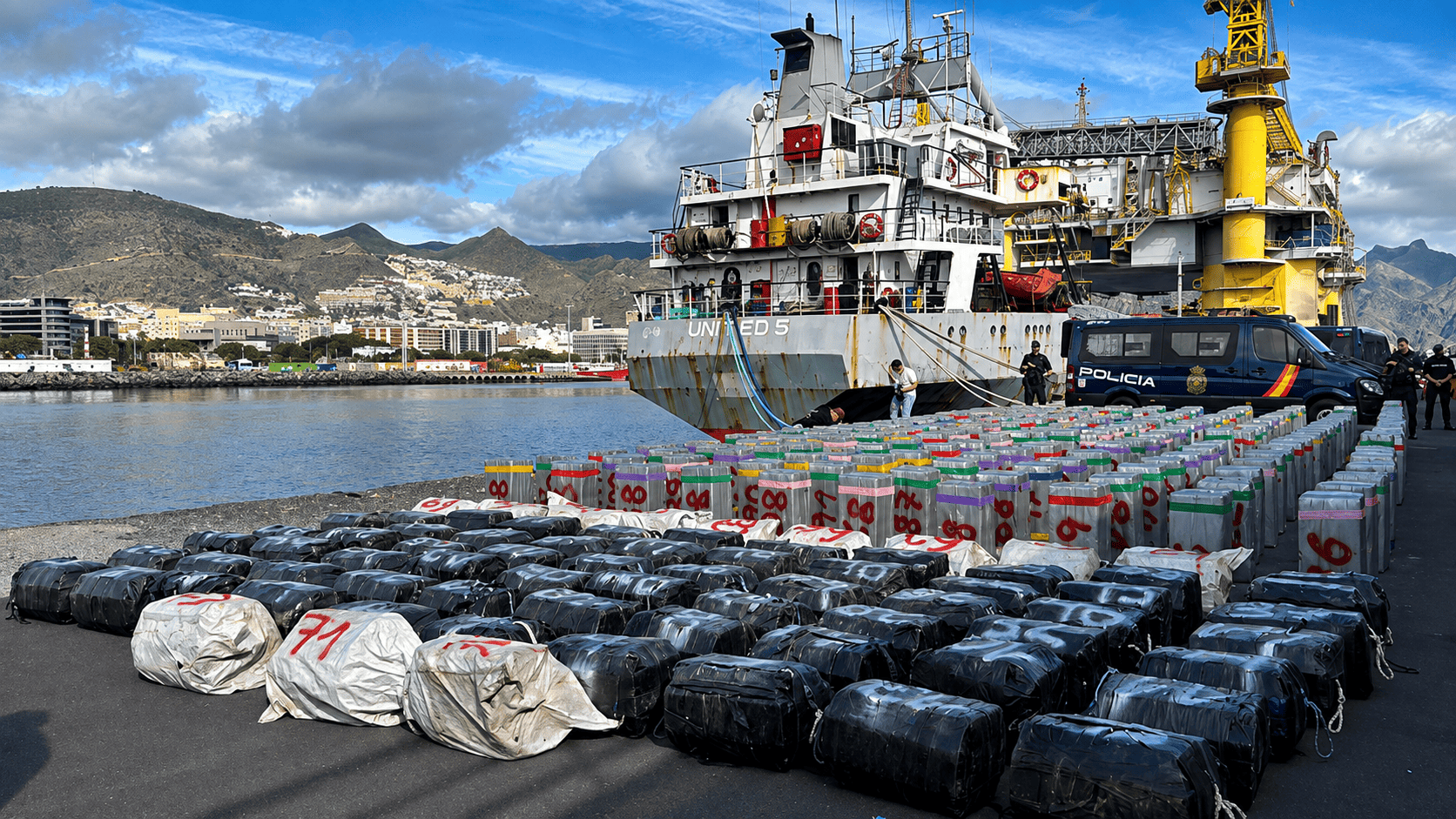
A coordinated 14-nation maritime interdiction operation has seized hundreds of kilograms of cocaine in European waters, reinforcing the reality that commercial vessels remain a primary vector for drug trafficking — and that compliance obligations on shipowners and masters are intensifying.
A major multi-national maritime law enforcement operation recently concluded in European waters, with authorities from 14 countries working in concert to intercept a substantial cocaine consignment. The operation — the latest in a series of coordinated interdictions under a joint enforcement framework — resulted in the seizure of more than 450 kilograms of cocaine. While the headline number will rightly attract attention, the operational and commercial implications for legitimate shipping run considerably deeper than the enforcement statistics suggest.
What the Operation Represents
This was not a single-agency intercept or a fortunate customs discovery at a terminal gate. It was a structured, intelligence-led, multi-jurisdictional operation conducted across open waters and involving coordinated action between naval, coast guard and law enforcement assets from across Europe and beyond. The scale and sophistication of the coordination signals that maritime drug interdiction has matured into a standing capability rather than an episodic response.
The fact that this is at least the sixth iteration of the operation under the same operational name tells its own story. Authorities are not reacting; they are running a sustained, evolving programme targeted specifically at maritime drug trafficking routes in European waters. That persistence reflects both the continued demand for narcotics and the continued exploitation of commercial shipping as a concealment platform.
Why Commercial Shipping Is Always in the Frame
Drug trafficking organisations have long recognised that the commercial shipping system — with its enormous cargo volumes, complex ownership structures, multiple port calls and polyglot crews — offers significant opportunities for concealment. Contraband is typically concealed in legitimate cargo consignments, inside containers, within vessel structures, or in packages attached externally to hulls and sea chests. In none of these scenarios is the shipowner, operator or master necessarily complicit. But that distinction, while legally critical, does not insulate a vessel or its commercial interests from serious disruption.
When a vessel is interdicted, detained for inspection, or named in an enforcement action, the commercial consequences are immediate and severe: charter hire continues to accrue, cargo is delayed, port calls are missed, and the vessel may be held for days or weeks. P&I cover may face scrutiny. Reputational damage in the chartering market can persist long after the vessel is cleared. In some jurisdictions, the vessel itself may be liable to forfeiture proceedings regardless of owner culpability, depending on local law.
The Hull Attachment Problem
One of the more technically challenging dimensions of maritime drug trafficking is the increasing use of externally attached packages — sometimes called parasitic packages — affixed to hulls, rudders, bow thrusters, and other submerged structures. These are typically attached in port or at anchor by divers working for trafficking organisations, and retrieved at a subsequent port by a different team. The vessel and crew may be entirely unaware.
This method is particularly insidious because it imposes liability risk on a vessel without any action or knowledge on the part of the operator. Some port state authorities treat discovery of such packages as a flag against the vessel regardless of circumstances. Owners and managers operating vessels calling at ports in West Africa, the Caribbean, South America and parts of the Mediterranean should treat underwater hull inspection as a standing operational requirement, not an occasional precaution.
- Arrange commercial diver inspections at departure from high-risk ports, not just arrival at the next port
- Document all inspections meticulously in the vessel’s security log
- Ensure the Ship Security Plan addresses the specific threat of parasitic package attachment
- Brief crew on what to look for during deck watch, particularly during anchoring in unsupervised anchorages
Flag State, Port State and P&I Implications
Operations of this nature are conducted under frameworks that facilitate rapid information sharing between flag states, port state control authorities, and customs and border agencies. A vessel that appears in intelligence holdings — even peripherally — may face heightened PSC scrutiny at subsequent port calls. Masters should be aware that an increased inspection burden may follow a vessel that has called at ports implicated in trafficking routes, even without any direct connection to a seizure.
P&I clubs have for some years been developing guidance on the drug trafficking exposure of entered vessels. Most clubs will respond to a cocaine seizure event by closely examining whether the shipowner took reasonable and prudent precautions. The adequacy of the vessel’s drug and alcohol policy, the implementation of its Ship Security Plan, and the documented conduct of cargo and access controls will all be scrutinised. Policies that exist only on paper will not assist a claim.
What Charterers and Operators Should Consider
Chartering professionals sometimes treat drug trafficking as a security matter that sits with the technical and crewing departments. That compartmentalisation is commercially dangerous. The routing instructions a charterer provides, the loading ports a voyage order specifies, and the anchorage choices made during a voyage all carry drug trafficking risk dimensions that should be part of the commercial risk assessment.
Voyage charter parties increasingly contain drug trafficking clauses that attempt to allocate liability between owner and charterer. These clauses are not standardised, and their practical effect in the event of a seizure depends heavily on the jurisdiction where proceedings are brought. Legal review of drug-related indemnity provisions should be a routine element of charter party negotiation for vessels trading in affected regions, not an afterthought.
The Intelligence Environment Is Changing
The operational sophistication demonstrated by law enforcement in an exercise like this also signals a growing intelligence capability focused on vessel movements, ownership structures and crew patterns. Automatic Identification System data, financial transaction monitoring and port call records are all being integrated into analytical frameworks that can generate targeting packages for enforcement operations. Vessels that appear in multiple risk indicators — certain flag registries, particular ownership chains, repeated calls at specific ports — may accumulate a profile that attracts interdiction regardless of any specific intelligence about a particular voyage.
This is not a reason for alarm among legitimate operators, but it is a reason to ensure that corporate structures, management arrangements and operational records are transparent and readily verifiable. An operator who can quickly demonstrate a clean compliance history through well-maintained documentation is in a materially stronger position during any enforcement engagement than one who cannot.
Final Thoughts
The seizure announced under Operation White Sea VI is a law enforcement success, and it should be recognised as one. But for the shipping community, the more important signal is systemic: European authorities now operate a persistent, intelligence-driven, multi-national interdiction capability in waters that include some of the world’s busiest commercial shipping lanes. The question for shipowners, operators and masters is not whether this affects them. It does — operationally, commercially and legally, even when they are entirely innocent parties.
The industry response should not be paralysis or over-reaction, but it should be purposeful. Drug control provisions in security plans need to be genuinely implemented, not filed and forgotten. Hull inspection regimes need to be calibrated to actual risk. Charter party drug clauses need legal attention. And compliance culture — from the boardroom to the anchor watch — needs to reflect the reality that commercial shipping operates in an environment where criminal organisations actively seek to exploit it.
Twenty-five years at sea taught me that the ships that get into the most serious trouble are rarely the ones that deliberately break rules. They are the ones that assume a risk does not apply to them. In the current enforcement environment, that assumption has become an expensive one to hold.