
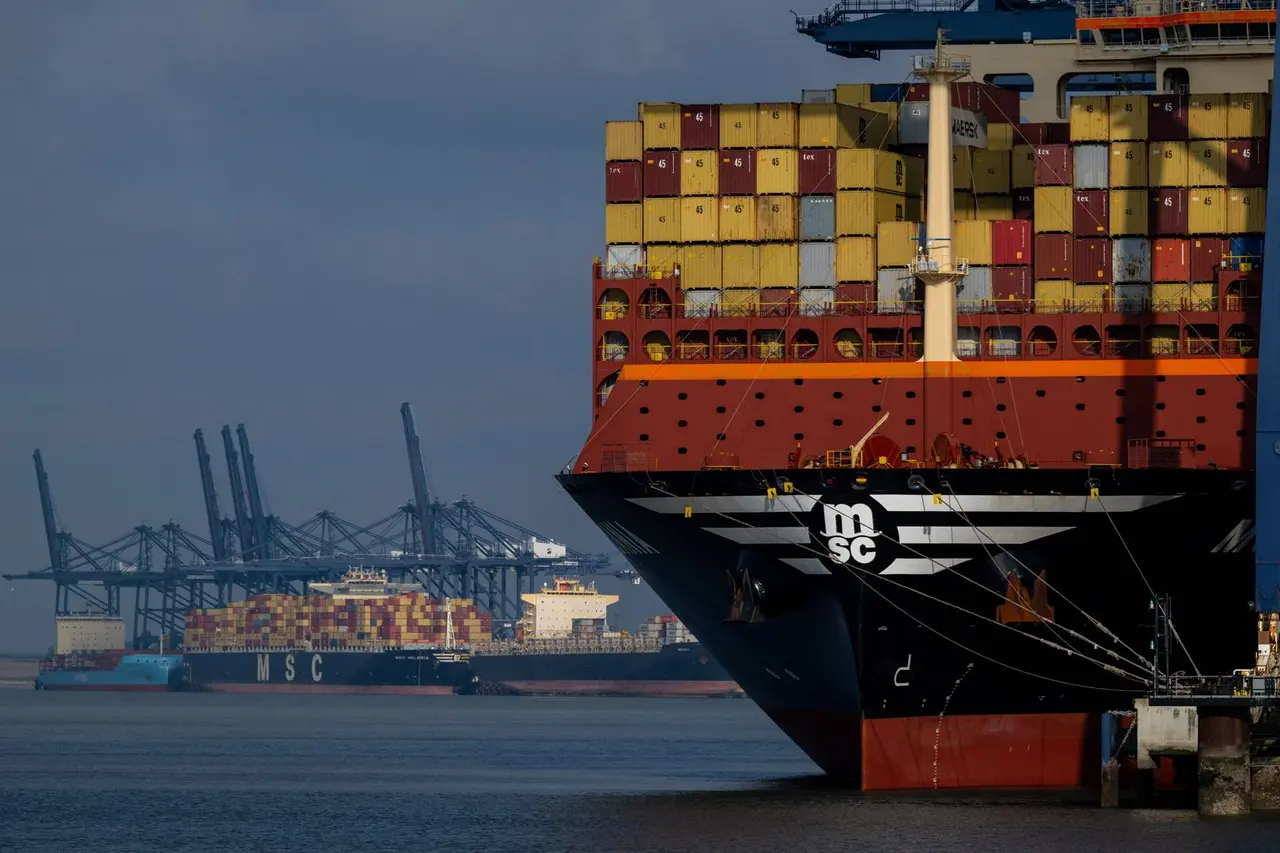
A 2023 container fire aboard MSC Carlotta, allegedly caused by improperly secured used electric vehicles, has resulted in litigation that raises urgent questions about how the industry handles damaged EV cargo.
A lawsuit filed by Mediterranean Shipping Co against US vehicle logistics specialist CargoLoop may appear, on the surface, to be a routine cargo dispute over a relatively modest sum. It is anything but. The allegations arising from a container fire aboard a vessel sailing off the Baja California coast in September 2023 cut to the heart of one of the most serious unresolved safety challenges in commercial shipping: the carriage of used, previously damaged electric vehicles in standard dry containers.
The fire reportedly originated in one of two forty-foot high-cube containers loaded with battery-powered vehicles, spread to the second unit, and caused collateral damage to surrounding boxes. The ship diverted to Mexico to discharge, inspect and restow the affected cargo. Nobody, as far as is publicly known, was seriously hurt — but the sequence of events that allegedly led to the fire deserves careful attention from every party in the containerised vehicle logistics chain.
What the Allegations Tell Us
According to MSC’s complaint, the vehicles were packed on wooden racking systems inside the containers, with at least one car stowed above another. The carrier alleges that racking failure during the voyage allowed an upper vehicle to collapse onto one below, potentially compromising a battery pack and triggering the ignition event. Investigators are said to have identified the probable origin point as the area where a used Tesla sedan was positioned above an older hatchback.
MSC also advances alternative theories: that battery packs may have been damaged during forklift handling prior to loading, or that required precautions — such as disconnecting vehicle batteries before stuffing — were not properly followed. The complaint notes that similar racking failure was observed in another CargoLoop container on the same sailing, suggesting a systemic packaging concern rather than an isolated incident.
What makes this legally and operationally interesting is that the cargo documents apparently identified both the vehicles’ ages and their dangerous goods classification. MSC accepted the shipment. That acceptance will almost certainly become a focal point in any defence CargoLoop mounts. The question of how much due diligence a carrier must exercise at the point of booking and gate-in — versus the degree of responsibility that rests with the packer and shipper — is precisely the kind of argument that generates years of litigation and, eventually, industry guidance.
Why Wooden Racking for EVs Is a Problem Waiting to Happen
Anyone who has walked a container terminal yard or surveyed vehicle cargo will understand the structural limitations of timber racking. It is widely used for transporting cars in containers because it is cheap, adaptable and readily available. For conventional internal combustion engine vehicles, the consequences of a racking failure mid-voyage are typically limited to vehicle-on-vehicle impact damage — commercially inconvenient, but not existentially dangerous.
Battery electric vehicles change that calculus entirely. A lithium-ion traction battery that sustains a significant impact load does not necessarily fail immediately. It may enter a state of internal degradation that eventually leads to thermal runaway hours or days later, when the ship is well offshore and firefighting options are constrained. For used vehicles that have already suffered prior damage — which is the category under dispute here — the risk profile is materially higher still. A battery pack that has been in a previous collision may already have compromised cell integrity invisible to external inspection.
Stacking a heavy EV above another vehicle on timber racking introduces dynamic loads that are difficult to predict or control. Container ships roll and pitch. Lashing arrangements that appear adequate at loading may prove insufficient under sea conditions. The forces involved in a racking collapse in a loaded forty-footer are considerable, and if the vehicle that falls is carrying a large-format battery pack in a compromised state, the results can be exactly what MSC alleges happened here.
The Dangerous Goods Classification Question
Used and damaged EVs occupy an uncomfortable regulatory space. The IMDG Code and related guidance have evolved to address lithium batteries as cargo, but the application of those rules to whole vehicles — particularly second-hand, damaged or end-of-life units — remains an area where practice outpaces regulation. Different jurisdictions and different carriers apply varying thresholds for what constitutes a vehicle that must be declared and handled as dangerous goods.
In this case, the dangerous goods classification was apparently declared. The cargo was accepted. But declaration alone does not resolve the question of whether the packaging, handling and stowage methods were appropriate for the specific hazard profile of the cargo. That is a gap the industry has not yet adequately closed.
Key issues that this case brings into focus include:
- Whether timber racking is an acceptable primary securing method for any EV stacked above another vehicle, damaged or otherwise
- What pre-stuffing battery state-of-health checks should be mandatory before a damaged EV is loaded into a container
- Whether battery disconnection procedures should be a booking condition rather than a recommendation
- How carriers verify that dangerous goods packing instructions have actually been followed at the point of stuffing, not just declared on paper
- What stowage position requirements should apply to EV containers on container vessels — particularly relative to firefighting access and system coverage
Commercial and Insurance Implications
The sum in dispute — in the region of USD 273,000 — is not large by P&I or hull and machinery standards. But litigation of this kind has an influence on the market well beyond the immediate claim. Insurers, P&I clubs and hull underwriters are watching cases like this closely as they attempt to price and manage EV-related cargo risk. The outcome will inform how liability is allocated between carrier, packer, shipper and forwarder in future incidents.
For carriers, the case underlines the tension between commercial acceptance of cargo and the safety and liability consequences of that acceptance. Booking teams and documentation departments face real pressure to accept paying cargo. But when that cargo is used, damaged battery-electric vehicles packed on wooden racking by a third-party logistics provider, the downstream exposure in the event of a thermal incident can far exceed the freight revenue.
For vehicle logistics operators and freight forwarders arranging the movement of used EVs, the message is equally pointed. The convenience and cost efficiency of timber racking in standard containers may need to give way to engineering solutions specifically designed for the mechanical and electrochemical hazards of battery-powered vehicles — particularly where the vehicles have pre-existing damage histories.
What Masters and Ship Managers Should Take From This
From an operational standpoint, container fires involving lithium batteries remain among the most dangerous scenarios a ship’s crew can face at sea. Fixed firefighting systems in container holds are not designed to suppress lithium battery thermal runaway — they can control flame spread and cool surrounding cargo, but they cannot reliably extinguish a battery that has entered a runaway state. The practical firefighting response is suppression and boundary cooling, not extinction.
Masters accepting manifests that include used or damaged EVs should satisfy themselves — to the extent the information is available — that stowage positions provide reasonable firefighting access and that dangerous goods documentation is complete. Ship managers and safety superintendents should be reviewing their shipboard procedures for EV-related cargo incidents in light of accumulating real-world experience, of which this case is one more data point.
It is also worth noting that the vessel diverted to a Mexican port to discharge the damaged containers. That diversion has costs — bunkers, port charges, time off-hire considerations for any chartered tonnage, cargo claims from unaffected shippers whose boxes were delayed. The cascading commercial consequences of a single container fire are rarely limited to the immediate damage.
Final Thoughts
The MSC and CargoLoop dispute is significant not because of its size, but because of what it represents. The global trade in used electric vehicles is growing. As first-generation EVs age out of primary service in markets with strong EV adoption, more of them will move as second-hand cargo — often damaged, often with battery histories that are poorly documented, and often packed by parties whose expertise lies in logistics rather than in lithium battery chemistry.
The industry’s current framework for managing this cargo stream is inadequate. Regulatory guidance is still catching up with practice, carrier booking criteria vary widely, and packing methods that were adequate for conventional vehicles are being applied to a fundamentally different hazard profile. Cases like this one will, eventually, drive clearer standards — but the path from incident to regulation runs through courtrooms and P&I committees, not just safety committees, and it takes time.
Shipowners, operators and their insurers should not wait for that process to complete before reviewing how they accept, document, stow and respond to used EV cargo. The fire aboard MSC Carlotta was contained. The next one may not be.