
Key Takeaways
- India has granted in-principle approval to four shipyard projects worth a combined INR20.45bn under its national shipbuilding scheme.
- The initiatives include major upgrades and new repair facilities by Cochin, Swan, Titagarh, and MAT Marine.
- Qualifying projects can receive capital assistance covering 25% of approved costs, pending financial closure and independent appraisal.
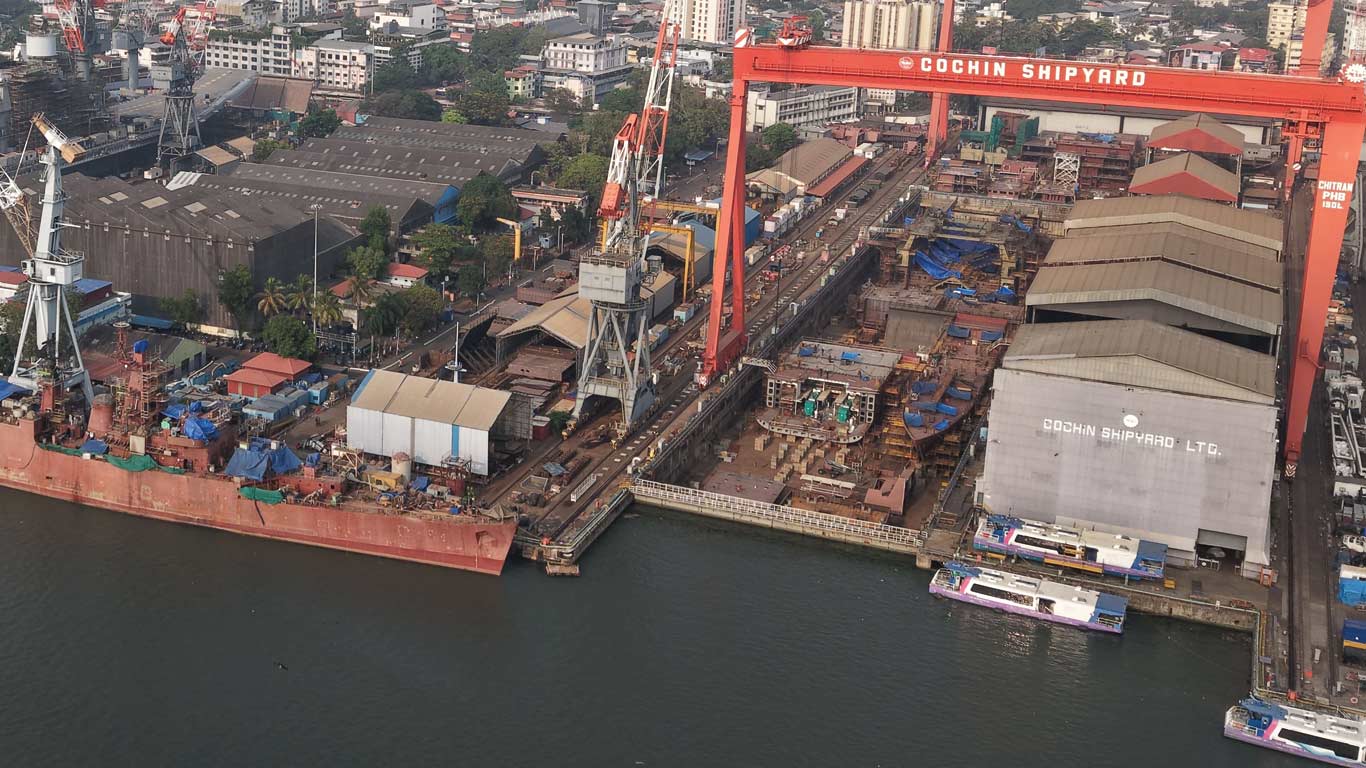
India has advanced four major shipyard enhancement projects through the in-principle approval stage, aiming to alleviate domestic infrastructure bottlenecks. Under the state-backed Indian shipbuilding scheme, this combined investment package valued at INR20.45bn ($214m) targets regional facilities managed by Cochin Shipyard, Swan Defence and Heavy Industries, Titagarh Naval Systems, and MAT Marine. This comprehensive Indian shipbuilding scheme is designed to address historical capacity constraints across the region.
Technology and Vessel Development Under the Indian Shipbuilding Scheme
The approved initiatives focus on expanding regional throughput for commercial and naval construction alongside specialised marine engineering capabilities. The technical scope ranges from heavy-lift crane integration to dedicated repair docks capable of handling mid-sized tonnage. Cochin Shipyard’s INR9.2bn project represents the largest single undertaking, comprising a brand-new repair facility developed in tandem with the Deendayal Port Authority. Meanwhile, Swan Defence has outlined an INR5.04bn first-phase upgrade at Pipavav centered primarily on the procurement and installation of modern heavy-lift cranes to boost yard efficiency.
Financial Mechanisms and Scheme Framework
Under the national shipbuilding development framework, qualifying yard operators can secure capital financial assistance covering up to 25% of approved project costs, capped at INR15bn per yard. However, these initial clearances do not constitute a binding financial commitment from the state. Final support remains contingent upon rigorous independent appraisal, strict financial closure, and eventual formal sanction from government authorities.
Claimed Benefits
The upgrades are designed to expand national construction output and reduce heavy reliance on overseas repair yards. Titagarh’s slated facility, backed by an INR5.16bn investment, targets an annual output of 10 to 12 vessels reaching up to 160 metres in length. Alongside MAT Marine’s INR1.05bn development for Kakinada, these projects directly strengthen domestic fleet ownership and regional maintenance capacity.
Technical Limitations
Despite the strategic scope, expanding physical footprint involves complex civil engineering hurdles, dredging dependencies, and long lead times for heavy shipyard machinery. Upgrading existing slipways and installing modern heavy-lift gantry cranes also requires careful management of site operations, complicating phased yard modernisation schedules.
Commercial Practicality
Commercial viability depends heavily on sustained order books and competitive domestic pricing against established regional competitors in Asia. Because preliminary approvals lack immediate funding guarantees, operators must navigate private capital markets to secure the remaining 75% of capital expenditure required for full completion.
Industry Outlook
These preliminary approvals signal a concerted policy push to modernise South Asia’s maritime industrial base. If successfully financed, the expanded yards will offer vital regional alternatives for shipowners seeking drydock availability and newbuilding slots.
Final Thoughts
The progression of these four regional shipyard projects highlights India’s intent to scale maritime manufacturing capacity. Translating these preliminary approvals into operational assets will ultimately depend on disciplined financial execution and robust long-term commercial demand.
One comment