
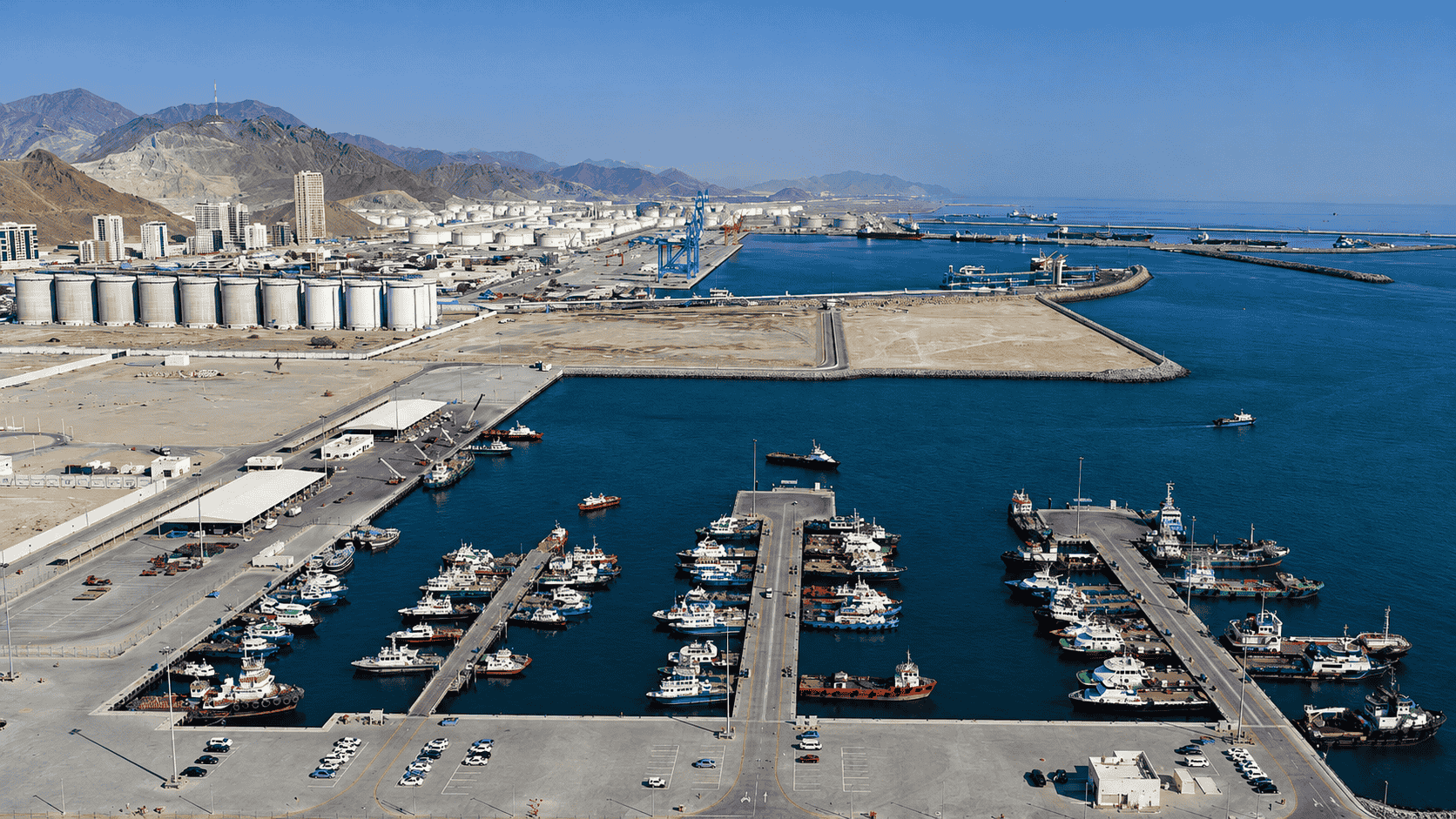
As geopolitical tensions persist around the Strait of Hormuz, DP World’s latest investment in Fujairah reflects a longer-term shift towards supply chain resilience rather than simply increasing port capacity.
Introduction
For decades, the Strait of Hormuz has remained one of the world’s most strategically important maritime chokepoints. Around one-fifth of global oil consumption passes through this narrow waterway, making any disruption an immediate concern for shipowners, charterers, insurers and energy markets.
Against this backdrop, DP World’s decision to develop new terminal infrastructure in Fujairah deserves attention. While announced as a commercial port expansion, the project also represents a broader strategic move: increasing logistics capability on the Gulf of Oman, outside the Strait of Hormuz itself.
For the maritime industry, this is less about building another terminal and more about strengthening operational resilience in an increasingly uncertain security environment.
What Has Been Announced?
DP World has confirmed plans to develop two new terminals in Fujairah on the UAE’s east coast.
Unlike Dubai’s Jebel Ali or Abu Dhabi’s Khalifa Port, Fujairah sits directly on the Gulf of Oman, allowing vessels to access the Indian Ocean without first transiting the Strait of Hormuz.
This geographical advantage has become increasingly valuable following repeated security incidents affecting commercial shipping in both the Strait of Hormuz and the wider Middle East.
While the project will expand cargo-handling capability, its real significance lies in providing greater routing flexibility for regional logistics and energy supply chains.
Why Fujairah Matters
Fujairah already occupies a unique position in global shipping.
It is one of the world’s largest bunkering hubs and an important location for:
- Crude oil storage
- Ship-to-ship transfers
- Tank cleaning operations
- Offshore support services
- Marine repairs
- Crew changes
- Container and general cargo handling
Its location outside Hormuz means ships calling at Fujairah avoid one of the world’s most politically sensitive maritime bottlenecks before reaching open ocean.
That distinction becomes increasingly important whenever regional tensions escalate.
Operational Implications for Shipowners
From an operational perspective, additional infrastructure offers more than increased berth availability.
Owners and operators may benefit from:
Greater Voyage Flexibility
Alternative loading and discharge options improve contingency planning when security conditions deteriorate.
Reduced Exposure
Although Fujairah remains part of the wider regional security picture, vessels can minimise unnecessary transit within confined waters when commercial arrangements permit.
Improved Port Resilience
Additional terminals reduce congestion risk, improve scheduling flexibility and create more options during periods of disruption.
Enhanced Bunkering Support
Fujairah continues to strengthen its position as a global bunkering centre, supporting conventional fuels while also preparing for future alternative-fuel demand.
Commercial Implications
Infrastructure investments rarely occur in isolation.
For charterers, traders and terminal operators, expanding Fujairah represents confidence that Gulf trade will remain robust despite geopolitical uncertainty.
Greater capacity can also influence:
- Cargo routing decisions
- Storage availability
- Port competition
- Vessel turnaround times
- Regional logistics strategies
Over time, increased competition between regional ports may improve service levels while helping relieve congestion elsewhere in the Gulf.
Security Considerations
It would be incorrect to suggest that Fujairah removes geopolitical risk altogether.
Vessels operating in the Gulf of Oman remain subject to regional security assessments, war-risk insurance requirements and voyage-specific risk management.
Masters and company security officers should continue to monitor:
- Flag-state guidance
- Naval security advisories
- Company voyage risk assessments
- Marine insurer recommendations
- Charterparty obligations
Infrastructure can improve operational flexibility, but it cannot eliminate geopolitical exposure.
What Shipowners and Charterers Should Consider
The expansion provides an opportunity for operators to review broader logistics strategies rather than focusing solely on individual voyages.
Questions worth asking include:
- Could alternative regional ports improve supply-chain resilience?
- Are charterparty clauses sufficiently flexible during security disruptions?
- How would prolonged Strait of Hormuz restrictions affect fleet deployment?
- Are contingency bunkering arrangements adequate?
- Does the company’s voyage planning adequately account for regional security developments?
Future Outlook
The maritime industry has repeatedly demonstrated that geopolitical shocks accelerate infrastructure investment.
Just as congestion during the COVID-19 pandemic reshaped port strategies worldwide, ongoing Middle East security concerns are encouraging governments and terminal operators to diversify logistics networks.
Fujairah’s expansion should therefore be viewed not simply as additional capacity, but as part of a broader trend towards building resilience into global shipping.
If regional tensions continue over the coming years, ports located outside major chokepoints are likely to become increasingly attractive for both commercial and strategic reasons.
Final Thoughts
Port infrastructure is often judged by crane numbers, berth length and annual throughput. In reality, geography can be an even greater competitive advantage.
DP World’s investment in Fujairah recognises that resilience has become a commercial asset. For owners, charterers and logistics providers, having more options outside the Strait of Hormuz may prove just as valuable as adding another terminal.
As geopolitical uncertainty becomes a permanent feature of global trade, ports that reduce operational risk—not merely increase capacity—are likely to shape the next generation of maritime logistics.