
Key Takeaways
- Effective container shipping fire prevention requires moving risk screening upstream to the booking stage rather than managing hazards.
- Vessel fires reached a ten-year high, driven largely by misdeclared dangerous goods and fragmented cargo documentation.
- Automated data verification tools are increasingly necessary to protect charterers and operators from severe liability and operational delays.
Introduction
Surging safety incidents across global liner trades have intensified commercial and operational scrutiny on cargo acceptance protocols. Effective container fire screening is becoming essential as vessel casualties climbaccording to recent industry findings, forcing stakeholders to reassess how booking-stage compliance can mitigate rising liabilities.
Market development and container fire screening
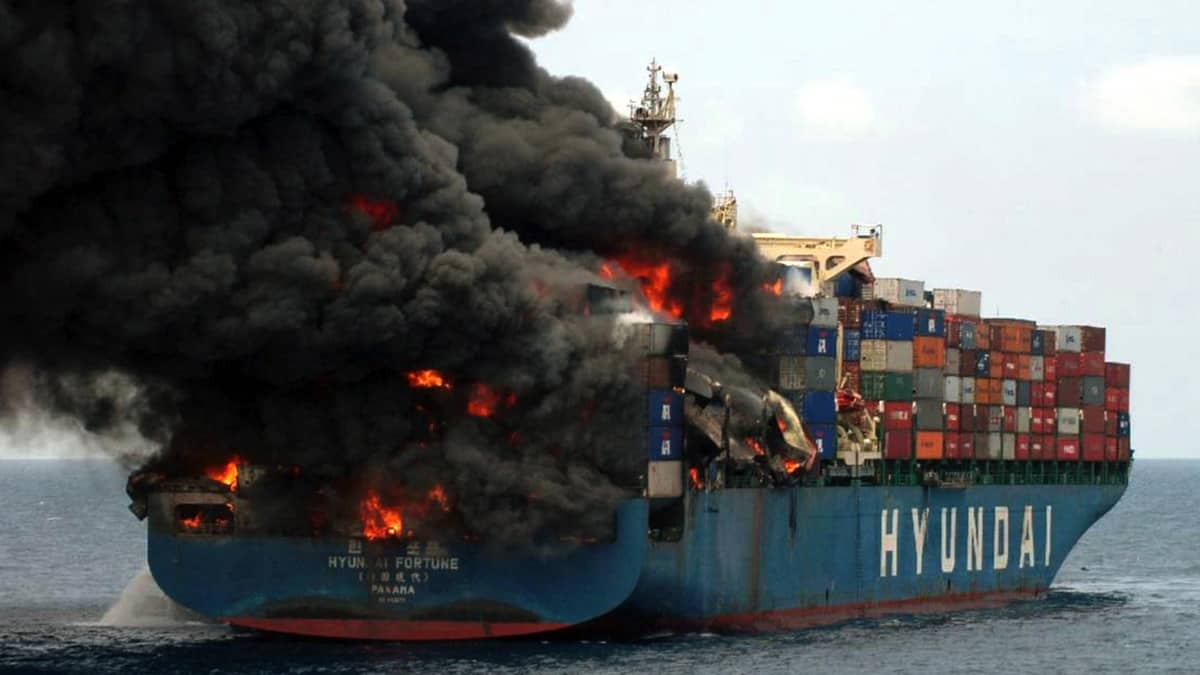
Recent analysispublished by maritime data specialists Thetius and Tigris Systems highlights a significant escalation in vessel casualties linked to dangerous cargoes. Industry recordscompiled across major reporting networks indicate that thermal events and boxship fires reached a ten-year highduring 2024, with a total of 250 vessel fires recorded—up 20% year-on-year. Furthermore, the TT Club estimates that a major containership fire occurs roughly every 60 days. Undeclared and misdeclared commodities continue to represent the primary operational trigger for these catastrophic events,according to the World Shipping Council, affecting global maritime logistics and port interfaces alike.
Rate, supply, and demand context
Liner operators face mounting operational friction as safety interventions slow down cargo intake. When vessels are forced to divert or manage onboard blazes, schedule reliability deteriorates sharply. This disruption echoes the systemic pressures traditionally set off by severe container port congestion, tightening effective vessel capacity and forcing charterers to absorb higher administrative and insurance overheads.
Drivers
The persistence of these incidents is largely attributed to fragmented documentation practices. Safety data sheets, dangerous goods declarations, and operational updates frequently reside in disconnected digital silos, leaving terminals and vessel planners working from incomplete or outdated information. As dangerous goods safety adviser Paola Staiano notes, before loading you need to know exactly what is in the container, as approximate information compromises safety systems. Rigorous container fire screening helps address these gaps. Lithium-ion batteries, charcoal, and other specialty cargoes further complicate compliance, where standard hazard classifications often fail to capture real-world thermal risksassociated with modern energy transit. While roughly 90% of document review remains manual, industry experts emphasise that automated systems must flag inconsistencies rather than quietly altering data.
Owner and charterer implications
Shipowners and charterers alike face escalating exposure under existing maritime law enforcement and cargo liability frameworks. Inaccurate manifest data directly threatens P&I coverage validity and increases exposure to costly salvage operations. Consequently, charterers are being pressured to adopt automated container fire screening tools that cross-reference UN numbers, packaging, and segregation requirements before a container reaches the terminal gate. As Mattias Larsson of MARANICS warns, if critical safety data cannot be seamlessly reused across operational platforms, it remains nothing more than glorified paper.
Near-term outlook
As regulatory bodies and underwriters demand tighter risk controls, automated booking screening is set to become a standard commercial prerequisite. Stakeholders who fail to modernise their data verification workflows risk severe booking rejections and prolonged off-hire disputes.
Final Thoughts
Moving risk mitigation upstream through enhanced container fire screening is no longer merely a technical recommendation; it is an urgent commercial necessity for safeguarding liner assets against avoidable catastrophic loss.
One comment