
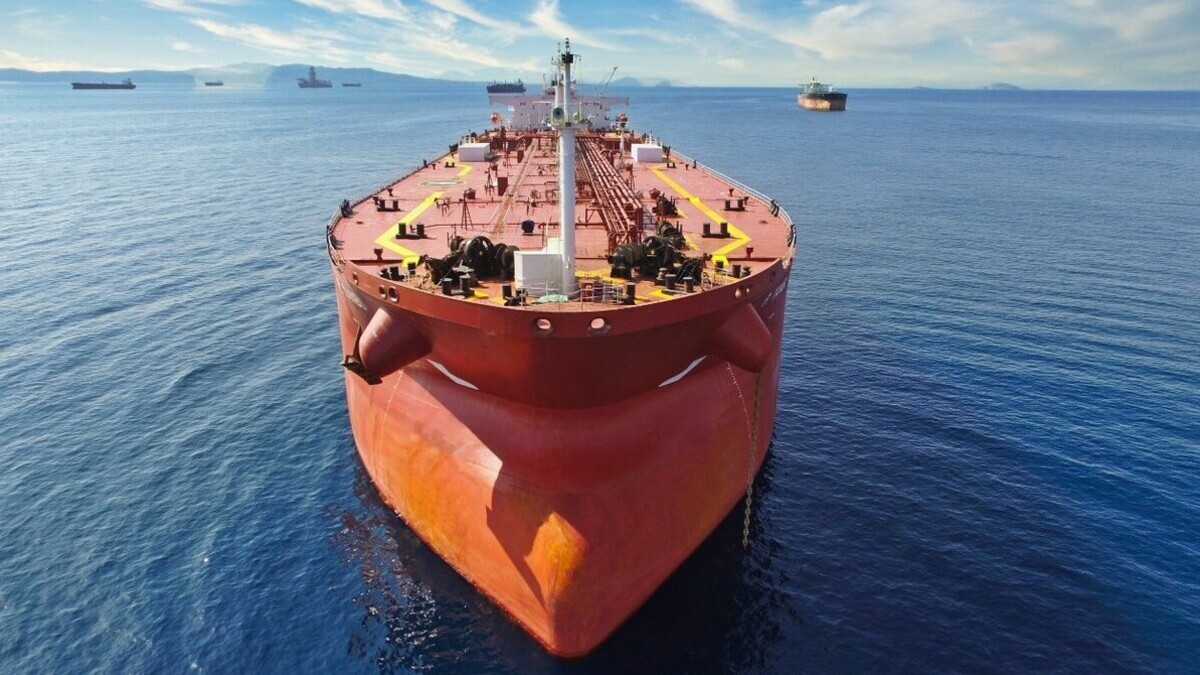
Owners are ordering VLCCs at unprecedented speed, but the ships arriving from 2027 onward could reshape the tanker freight cycle.
Crude tanker owners have moved decisively back into the newbuilding market.
Contracting during 2026 has already reached approximately 60 million deadweight tonnes across 234 vessels, making this the strongest crude tanker ordering year on record. The surge has been led overwhelmingly by Very Large Crude Carriers, with 151 VLCCs ordered and accounting for 79% of the contracted capacity.
The total crude tanker orderbook has consequently expanded to around 130 million DWT, equivalent to approximately 27% of the existing fleet. That is a substantial pipeline by tanker-market standards and immediately raises an important commercial question:
Is the industry finally replacing an ageing fleet, or is it creating the next period of oversupply?
The answer depends less on the headline orderbook and more on when these ships arrive, how many older vessels leave the market and whether future oil trades generate enough tonne-mile demand to absorb the additional capacity.
Why Owners Are Ordering Again
The current contracting wave is not difficult to understand.
Crude tanker owners have benefited from strong freight markets, geopolitical disruption and changes in oil-trading patterns. At the same time, several years of limited deliveries have left the fleet considerably older than it was during previous market cycles.
The average crude tanker is now approximately 14 years old. Around 22% of the fleet, representing about 105 million DWT, is already more than 20 years old, while crude tankers are generally designed around an expected commercial life of approximately two decades.
Owners are therefore facing a genuine renewal requirement.
A company operating older VLCCs may currently be earning strong returns, but it must also consider:
- Increasing maintenance expenditure
- More steel renewal during surveys
- Machinery reliability
- Vetting and terminal acceptance
- Insurance restrictions
- Charterer age limitations
- Energy-efficiency performance
- Reduced financing options
- Lower resale liquidity
Ordering a replacement vessel while earnings and cash flow remain healthy is commercially logical. The problem begins when replacement ordering develops into speculative expansion.
The Orderbook Is Large, but It Will Not Arrive Immediately
A record orderbook does not mean that 130 million DWT of additional capacity will suddenly enter the market.
Current deliveries are scheduled through 2030, while vessels being ordered now may require between two and four years before completion. BIMCO expects new capacity entering the market to increase progressively until at least 2028, following three years in which annual crude tanker deliveries remained below 10 million DWT.
This delivery schedule matters.
The immediate spot market will continue to be shaped primarily by:
- Available vessel supply
- Oil-export volumes
- Voyage distances
- Port delays
- Sanctions
- Weather
- Political disruption
- Vessel positioning
A tanker contracted today does not compete for a cargo tomorrow.
The more serious supply risk begins when delivery volumes accelerate and several large yearly programmes reach the water at the same time.
Replacement and Expansion Are Not the Same
The industry should not compare the orderbook with the fleet without considering potential recycling.
Approximately 105 million DWT of existing crude tanker capacity is already more than 20 years old, compared with an orderbook of around 130 million DWT. On paper, this suggests that a substantial part of the new capacity could replace older vessels rather than expand the fleet.
But age does not automatically produce demolition.
Older tankers may remain in service when freight earnings are strong. Some may move away from mainstream oil-company business and continue trading for less demanding charterers. Others may operate in sanctioned or opaque trades where vessel age and commercial acceptance are assessed differently.
This means that new deliveries do not necessarily remove an equivalent amount of old tonnage.
The real calculation is:
Net fleet growth = New deliveries − recycling and permanent removals
If 15 million DWT is delivered and only 5 million DWT is recycled, the commercial fleet still expands by roughly 10 million DWT.
The market must then generate enough additional cargo demand or voyage duration to employ that capacity.
Why Tonne-Mile Demand Matters More Than Oil Demand Alone
Tanker demand is not determined only by how many barrels of oil are consumed.
It is determined by how far those barrels travel.
A cargo transported from the Middle East to Asia may employ a VLCC for a different period than a cargo moving from the US Gulf or Atlantic Basin to the same destination. Longer voyages increase tonne-mile demand because vessels remain occupied for more days per cargo.
Changes in sanctions, refinery sourcing, regional production and geopolitical routing can therefore strengthen tanker employment even when total oil demand grows slowly.
The reverse is also true.
Higher oil production does not automatically produce stronger tanker markets when the additional barrels move over short distances, through pipelines or from producers located close to their buyers.
This is why fleet forecasts based only on global oil-demand growth are incomplete.
Oil-Market Uncertainty Complicates the Investment Case
The latest IEA outlook illustrates how uncertain the demand side remains.
The agency expects global oil demand to decline by approximately 1 million barrels per day during 2026, followed by a rebound of about 2 million barrels per day in 2027. It also describes the two-year rate of expansion as remaining below historical trends. The forecast is highly dependent on the recovery of production and tanker flows through the Strait of Hormuz.
For tanker investors, this creates a difficult contrast.
Current freight-market strength and geopolitical disruption support earnings and encourage ordering. However, a vessel delivered in 2028 or 2029 must remain commercially competitive for approximately 20 years.
The investment cannot be justified only by today’s spot market.
Owners must stress-test the vessel against:
- Weaker oil-demand growth
- Normalisation of disrupted trade routes
- Lower freight rates
- Higher financing costs
- Carbon pricing
- Fuel-efficiency requirements
- Reduced charterer acceptance of conventional tonnage
- Competing deliveries from other owners
A strong current market can support a newbuilding decision, but it should not replace a full-cycle investment analysis.
Freight Rates May Face Pressure From 2027 Onward
The current orderbook is unlikely to collapse freight markets immediately. The risk is more gradual.
As delivery volumes rise, charterers will have more vessels competing for cargoes. Position lists may lengthen, ballast competition may increase and owners may become more willing to reduce their rate expectations to avoid idle time.
The effect will depend on the balance between five major factors.
1. Recycling
Strong demolition volumes would reduce the net addition to the fleet. Continued trading of elderly ships would increase oversupply risk.
2. Sanctioned and Restricted Tonnage
The number of vessels technically existing in the fleet is not always the same as the number available to mainstream charterers.
3. Oil-Trade Geography
Longer Atlantic-to-Asia movements can absorb more vessel days than shorter regional trades.
4. Vessel Speed
Higher operating speeds increase effective fleet capacity because ships complete voyages more quickly. Slow steaming can absorb part of the physical fleet.
5. Delivery Discipline
Shipyard delays, cancellations and financing problems may reduce or postpone the capacity arriving during any particular year.
The orderbook should therefore be treated as a warning indicator, not as a guaranteed freight-rate forecast.
China Now Dominates Crude Tanker Construction
Chinese shipyards have secured approximately 82% of the crude tanker capacity contracted during 2026. Across the total existing orderbook, China holds about 70% of capacity, while South Korean yards account for approximately 25% and retain a comparatively stronger position in the Suezmax segment.
This concentration has several implications.
Chinese yards have expanded their tanker-building capability, offered competitive pricing and provided owners with access to construction slots that may not be available elsewhere.
However, concentrating such a large share of the orderbook within one shipbuilding country also creates exposure to:
- Yard-capacity pressure
- Equipment-supply constraints
- Delivery clustering
- Financing conditions
- Trade-policy changes
- Owner supervision requirements
- Variations in individual yard experience and quality
The country of construction alone does not determine vessel quality. The selected yard, specification, owner’s site team, equipment package and inspection regime remain decisive.
A competitively priced tanker becomes expensive when poor specification control produces operational limitations for the next 20 years.
The Alternative-Fuel Numbers Are Surprisingly Low
Despite increasing pressure to decarbonise shipping, only around 2% of the crude tanker capacity ordered during 2026 is expected to use alternative fuels, mainly LNG. A further 17% is described as capable of future conversion.
Across the complete crude tanker orderbook, approximately 9% is alternative-fuel capable and another 30% has been designed with potential retrofit options.
This indicates that many owners remain unwilling to commit to a specific future fuel.
That caution is understandable. Fuel availability, cost, storage requirements, engine technology and regulatory treatment remain uncertain.
However, ordering a conventional vessel without adequate future adaptability also carries risk.
A tanker delivered in 2029 could still be trading close to 2050. Owners should therefore examine more than the engine’s initial fuel choice. The specification should also consider:
- Energy-efficiency margins
- Space and structural provision for future conversion
- Electrical-load flexibility
- Shaft-generator arrangements
- Propeller and hull optimisation
- Carbon-capture readiness where practical
- Shore-power capability
- Digital performance monitoring
- Future fuel-tank arrangements
A “retrofit-ready” notation has limited value unless the physical design and commercial conversion pathway are realistic.
What Owners and Charterers Should Watch
The most important figure during the coming years will not be the gross orderbook. It will be net fleet growth.
Owners should monitor delivery schedules, recycling, slippage and the age profile of vessels remaining in active mainstream trade.
Charterers should not assume that record ordering will immediately produce cheaper freight. Until the vessels are delivered, available capacity may remain tight—particularly during disruption, congestion or sudden increases in export demand.
Investors should be especially cautious when valuing a newbuilding solely against present earnings. A tanker ordered near the top of the market may be delivered after the commercial cycle has already shifted.
For older-vessel owners, the period before heavy deliveries may provide an opportunity to maximise earnings, complete a sale or plan an orderly exit before second-hand values weaken.
Final Thoughts
The crude tanker industry needed fleet renewal. A growing proportion of its ships are approaching or exceeding conventional commercial age limits, and several years of low deliveries could not continue indefinitely.
But record ordering creates a new risk.
The market is moving from a shortage of modern tonnage toward a period in which replacement capacity may arrive faster than old ships are removed.
Whether this becomes a healthy renewal cycle or a serious oversupply problem will depend on recycling, oil-trade distances, geopolitical disruption and the discipline of owners placing further orders.
Today’s freight market explains why owners are ordering.
The delivery market of 2028 will determine whether they ordered too much.