Key Takeaways
- Global container port congestion has surpassed previous Covid-era peaks, with over 4.3 million TEU currently waiting to berth.
- Tropical storms in East Asia and upcoming transit restrictions at the Panama Canal are driving acute vessel delays.
- The ongoing capacity squeeze is sustaining elevated freight and charter rates across major global trade routes.
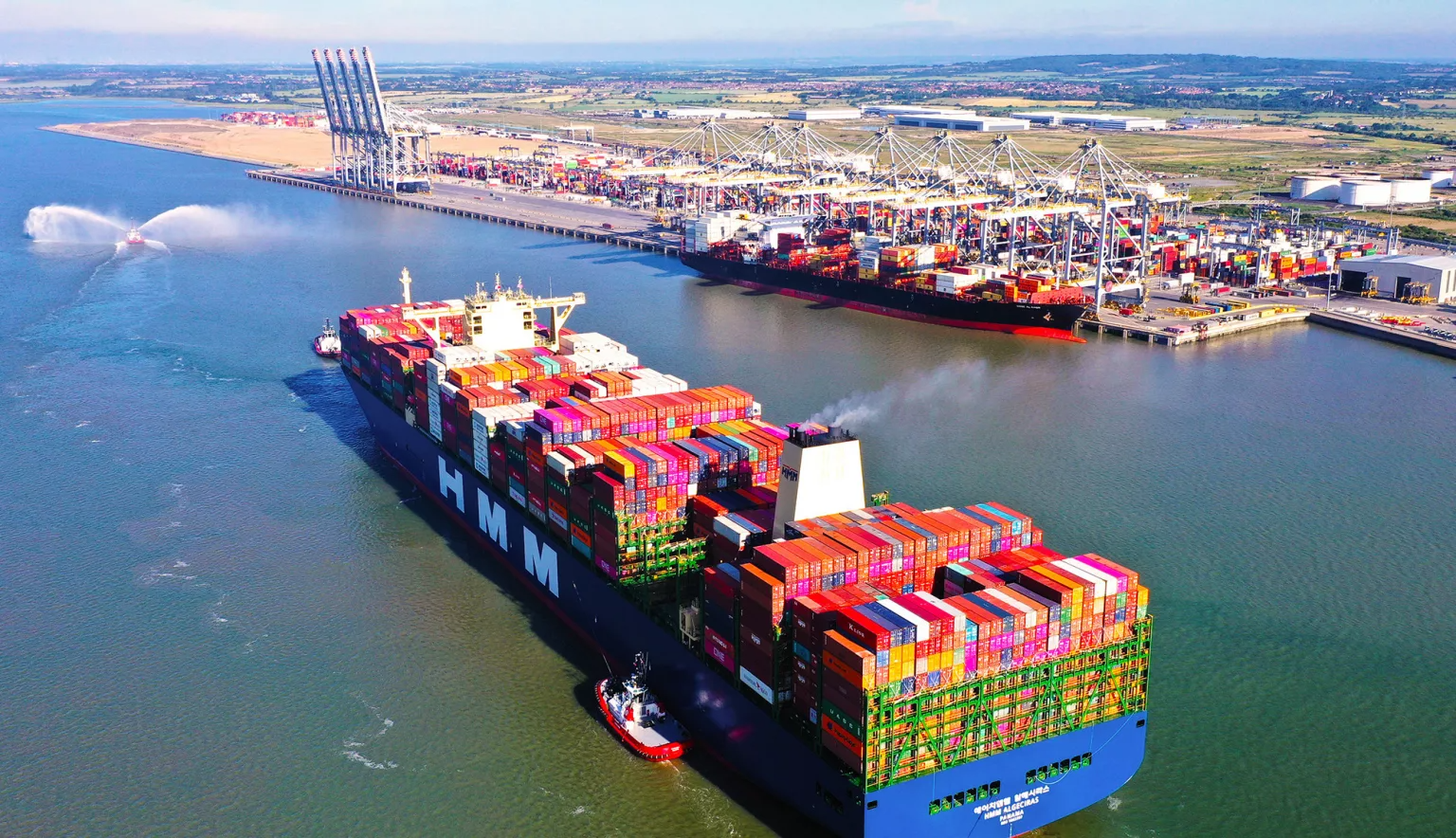
Global container port congestion has surpassed previous Covid-era peaks, removing more than 4.3 million TEU of active capacity from circulation and keeping sustained pressure on freight and charter rates according to recent industry data. This severe capacity squeeze compounds ongoing network disruptions, posing immediate scheduling and commercial challenges for liner operators and cargo owners worldwide.
The Scale of Container Port Congestion
Data from Linerlytica indicates that 4.3 million TEU is currently waiting to berth at container ports worldwide, exceeding the absolute peak of 4 million TEU recorded during the pandemic earlier in the decade. While congested tonnage currently represents approximately 12.6% of the 34.4 million TEU global fleet—lower than the 15.7% peak seen in 2022 when the fleet was smaller—the localized impact remains acute. East Asia has driven much of the latest surge following successive tropical storms that severely disrupted operations at major Chinese hubs.
Important confirmed details
Vessel queues in Shanghai and Ningbo have reached unprecedented levels for recent years. Portcast metrics highlight significant waiting times at Shanghai’s Yangshan terminals, stretching to five or six days for Gemini services and up to seven or eight days for other carriers. Concurrently, Sea-Intelligence estimates that these compounding delays remove roughly 1.7 million TEU of effective vessel capacity from the market. Schedule reliability remains subdued at 60% to 65%, with delayed ships arriving an average of five to five-and-a-half days behind schedule.
Operational and commercial implications
The resulting tightness in global tonnage supply has provided strong support for freight and charter markets already heavily inflated by regional geopolitical conflicts, such as the Iran war, and widespread diversions. Benchmark indicators clearly reflect this sustained upward pressure. Linerlytica calculates that the Shanghai Containerized Freight Index is significantly higher than when the conflict began, while S&P Global’s Platts Container Index also jumped to new highs for the year amid space shortages and regional bottlenecks. For further context on throughput milestones, see Shanghai container throughput records. Furthermore, this ongoing container port congestion continues to challenge liner efficiency across major trade lanes.
What happens next
Further operational friction is anticipated as the Panama Canal implements additional reductions in daily transit slots due to below-normal rainfall. Neopanamax slots are scheduled to fall alongside total Panama availability, constraining transits further. These restrictions will compound global schedule reliability issues, while overall tonnage scarcity is expected to keep charter rates firmly elevated as operators scramble for available vessels.
Final Thoughts
The resurgence of severe container port congestion demonstrates the ongoing vulnerability of modern liner networks to localized weather events, regional conflicts, and critical canal chokepoints. As carriers navigate compounding capacity constraints and rising operational costs, proactive schedule management and flexible routing will remain critical for mitigating further supply chain degradation.