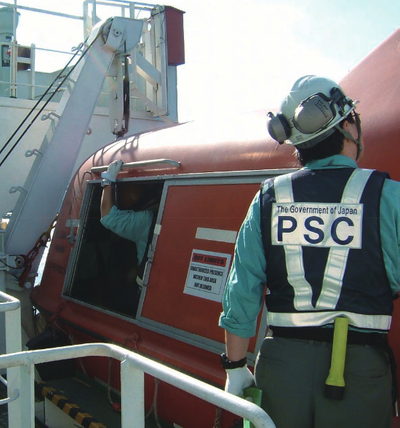
Port State Control inspections are sometimes described as unpredictable. The port, inspector and depth of examination may vary, but the fundamental purpose remains consistent: to verify that the ship, its equipment and its crew comply with applicable international requirements.
The latest Paris MoU figures show that familiar deficiencies continue to create serious problems. Its 2025 annual report, published on 1 July 2026, recorded a detention rate of 4.18%, compared with 4.03% during 2024. Fire safety, structural and electrical matters, Maritime Labour Convention requirements and ISM-related deficiencies remained prominent areas of non-compliance.
The difficult question is not why inspectors find these deficiencies.
It is why ships continue to sail with conditions that should already be known on board.
Port State Control Examines the Real Ship
A vessel may carry valid statutory and class certificates while still being detained.
Certificates confirm that the ship satisfied the applicable requirements when surveyed and that the relevant certification remains valid. They do not guarantee that every system has remained properly maintained since the survey.
Port State Control examines the vessel as it exists on the day of inspection.
The inspector may review documentation, but will also assess physical condition, equipment readiness, crew familiarity and the effectiveness of the ship’s safety-management system.
A well-organised certificate file cannot compensate for a fire door that does not close, an emergency system that cannot be operated or a crew member who does not understand their assigned duty.
Fire Doors Remain a Persistent Weakness
Fire doors may appear to be minor items compared with engines, generators or firefighting systems. Their function, however, is critical.
A fire door forms part of the vessel’s structural fire protection. It is intended to restrict the passage of smoke and flame and preserve the integrity of the fire boundary.
The 2025 Paris MoU report identified fire safety as accounting for 16.8% of the relevant deficiency category, while fire doors alone represented 3.1% at the specific-deficiency level.
Common failures include doors being tied open, damaged seals, defective self-closing arrangements, poor alignment and obstructions preventing complete closure.
None of these conditions requires advanced diagnostic equipment to identify.
They require routine inspection and a crew willing to correct improper practices rather than accepting them as normal.
Temporary Repairs Become Permanent Problems
Many deficiencies begin as minor defects.
A leaking pipe is temporarily clamped. A defective alarm is isolated until spares arrive. A damaged guard is removed. A fire flap becomes difficult to operate and is left for the next maintenance period.
Operationally, there may be valid reasons for applying a controlled temporary repair. The problem arises when the repair is not documented, monitored or permanently corrected.
By the time the vessel arrives at the next port, the temporary condition may have become part of normal operation.
An inspector will examine the condition, the associated risk assessment, the defect report, the repair plan and whether the flag State or classification society was informed where required.
A visible defect combined with weak documentation suggests that the safety-management system is not controlling the vessel effectively.
ISM Deficiencies Are Wider Than Missing Paperwork
The International Safety Management Code is sometimes reduced to manuals, checklists and signatures.
That is a serious misunderstanding.
The purpose of the system is to ensure that hazards are identified, responsibilities are clear, maintenance is controlled and corrective action is taken. A complete checklist has little value when the inspection recorded on it was not genuinely performed.
ISM-related deficiencies represented 4.5% of the total identified in the Paris MoU’s 2025 results.
When several unrelated defects are discovered, an inspector may reasonably question whether they are isolated failures or evidence of a wider management problem.
One defective light may be a maintenance issue. Multiple overdue tests, inaccurate records and crew unfamiliarity indicate a system that is not functioning as intended.
Crew Familiarity Can Decide the Inspection
A vessel’s equipment may be fully operational, but the ship can still attract deficiencies when the crew cannot demonstrate its use.
During an inspection, officers and ratings may be asked to explain or operate:
- Emergency fire pumps
- Emergency generators
- Steering arrangements
- Quick-closing valves
- Watertight doors
- Fixed firefighting systems
- Lifeboats and rescue boats
- Oil-filtering equipment
- Emergency shutdowns
Memorising the location of a procedure is not the same as being operationally familiar with the system.
Drills should therefore test actual competence. They should not become rehearsed performances designed only to produce a completed record.
MLC Compliance Must Match Shipboard Reality
The Paris MoU report also identified health protection, medical care, welfare and social-security protection under MLC Title IV as a recurring area of concern. Seafarers’ Employment Agreements remained among the specific deficiencies reported.
MLC compliance extends beyond displaying certificates.
Inspectors may examine employment agreements, hours of rest, accommodation, food, medical arrangements, wage records and the seafarers’ ability to raise complaints.
Records that appear artificially perfect may attract attention rather than confidence, particularly when they conflict with the vessel’s actual operational pattern.
Accurate records are essential. They must reflect reality, including occasions when hours were exceeded and the corrective action taken.
A Proper Pre-Arrival Inspection Is Different
Many vessels use a generic PSC checklist before entering port. The chief officer or chief engineer completes the form, the master signs it and the document is filed.
That process is ineffective when it becomes routine paperwork.
A meaningful pre-arrival inspection should be risk-based and should consider:
- The vessel’s recent deficiencies
- Outstanding defect reports
- Overdue planned-maintenance tasks
- Repeated alarms or equipment failures
- Crew changes
- The vessel’s age and condition
- Relevant inspection campaigns
- The ship’s trading area and risk profile
The inspection should be divided among responsible officers and followed by physical verification. Any defect that cannot be rectified before arrival should be formally assessed and reported through the appropriate channels.
Final Thoughts
Port State Control should not be approached as an exercise in hiding defects from an inspector.
A properly managed vessel should be able to demonstrate that defects are identified, risks are controlled and repairs are progressing through an accountable system.
The most damaging deficiencies are often not the most technically complex. They are the obvious defects that everyone on board has seen but nobody has taken ownership of.
PSC readiness does not begin when the pilot boards. It begins with the vessel’s everyday maintenance culture.