
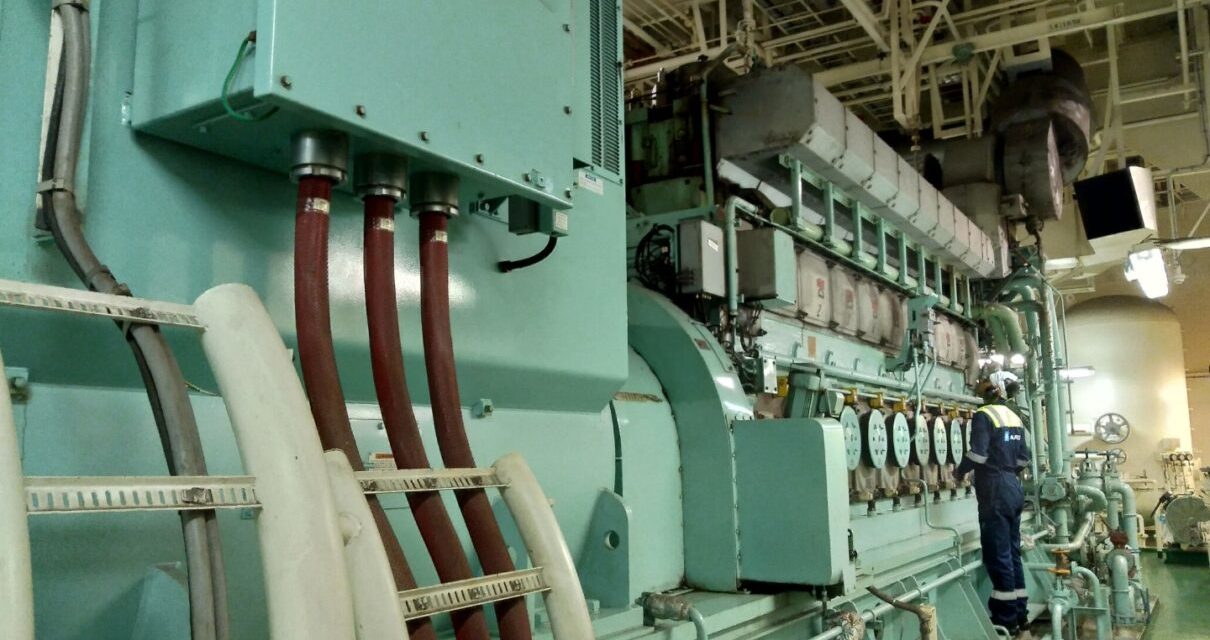
Auxiliary engines sit at the heart of a ship’s electrical life. Even on vessels where the main engine receives most of the attention, it is the auxiliary engines and associated generating plant that keep essential services running. Lighting, navigation systems, cargo support systems, pumps, accommodation loads and many safety functions ultimately depend on reliable shipboard power.
What an auxiliary engine does
An auxiliary engine usually drives an alternator to produce electrical power for the ship. Most commercial vessels have multiple diesel generator sets so that power can be matched to demand and redundancy is available if one unit is out of service. The number, size and arrangement depend on vessel type and operational profile.
The basic system arrangement
- Fuel oil is supplied, conditioned and injected into the engine.
- Lubricating oil reduces wear and carries away heat from moving parts.
- Cooling systems control engine temperature using fresh water and often seawater through heat exchangers.
- Air intake and exhaust systems support combustion and gas discharge.
- The alternator converts mechanical power from the engine into electrical power.
- The switchboard distributes power to ship systems and can synchronise multiple generators.
Why multiple generators are used
A vessel’s power demand changes constantly. In port, cargo gear, ballast pumps, accommodation loads and deck machinery may drive demand high. At sea, demand may reduce depending on vessel type. Running a single oversized generator at low load is inefficient and can create engine health issues. Multiple units allow the ship to match load more intelligently while retaining redundancy.
Key operating concerns
- Load sharing and synchronisation when running generators in parallel.
- Fuel quality, injection condition and combustion efficiency.
- Cooling-water temperature control and heat exchanger cleanliness.
- Lubrication quality, pressure monitoring and contamination control.
- Vibration, abnormal noise and trend changes that may indicate wear or misalignment.
Power management and blackout prevention
Reliable power management is about more than simply starting a genset. Ships need systems and procedures to prevent blackouts, shed non-essential load when required and ensure emergency power is available if the main generating plant fails. Good power management combines automation, operator awareness and sound maintenance.
Maintenance mindset
Marine auxiliary engines benefit from condition-based awareness as well as planned maintenance. Engineers monitor pressures, temperatures, exhaust values, lube oil condition and vibration trends. Small changes often reveal developing issues before they become major breakdowns.
A beginner’s mental checklist
- Know how fuel, lube oil, cooling water, air and exhaust systems support the engine.
- Understand what the generator and switchboard do after the engine produces mechanical power.
- Remember that redundancy and load management are central design principles.
- Treat alarms and trend changes as useful warnings, not nuisances.
Once you understand how auxiliary engines produce and distribute power, much of shipboard electrical operation becomes easier to visualise. The machinery is technical, but the logic is clear: generate power safely, distribute it reliably, and always protect continuity of supply.
One comment