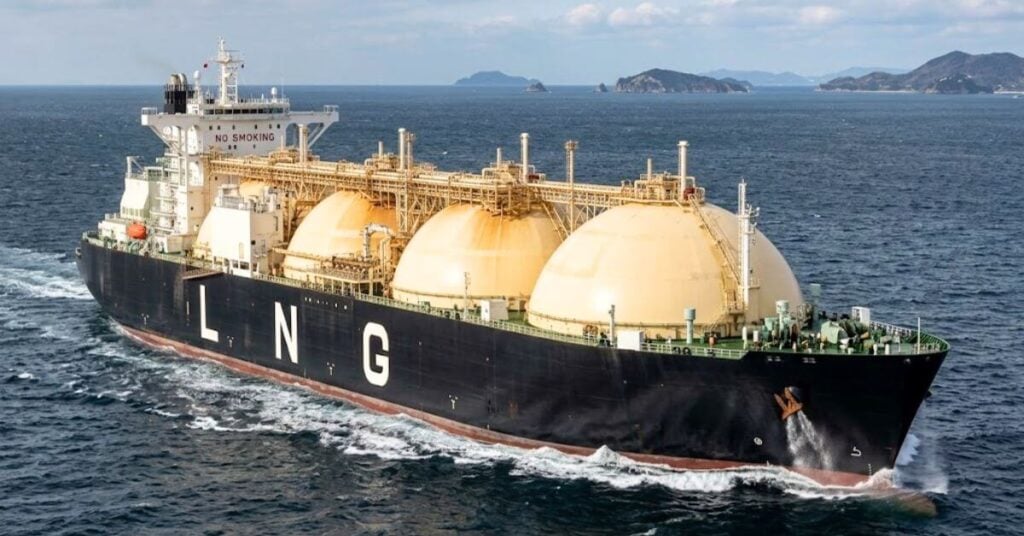
The departure of the QatarEnergy-controlled Al Areesh is an important test of the Strait of Hormuz, but shipowners, charterers and LNG buyers will need far more evidence before treating the route as reliably open.
A QatarEnergy-controlled LNG carrier has passed through the Strait of Hormuz, becoming the first such vessel to exit the waterway in nearly three weeks.
The movement is commercially significant. It shows that loaded LNG exports from the Gulf are physically possible despite the continuing security crisis. However, one successful transit should not be mistaken for a return to normal shipping.
For LNG producers, shipowners, charterers and buyers, the real question is not whether one vessel can pass through Hormuz. It is whether vessels can transit repeatedly, predictably and without exposing their crews to unacceptable risk.
What Happened?
The LNG carrier Al Areesh loaded its cargo at Qatar’s Ras Laffan terminal in early July before departing through the Strait of Hormuz. Ship-tracking data indicated that the vessel was sailing towards Port Qasim in Pakistan, with arrival expected on 31 July.
Its departure was the first visible exit by a QatarEnergy-controlled LNG tanker since 11 July. The interruption followed an attack involving the Qatari LNG carrier Al Rekayyat earlier in the month, after which the security risk for vessels operating in the area increased sharply.
The previous LNG carrier known to have exited was Al Hamra, which departed with a cargo loaded at the UAE’s Das Island.
Another LNG carrier, Mraweh LNG, operated in connection with ADNOC Gas, was also observed entering the strait in ballast. This is another positive operational signal, but it still does not establish a regular pattern of two-way LNG traffic.
Why This Transit Matters
Hormuz is not simply another regional shipping route. More than one-fifth of global LNG trade passed through the strait during the first half of 2025, with most of that volume originating in Qatar.
Qatar and the UAE account for virtually all LNG exported from inside the Gulf through Hormuz. Most of these cargoes move towards Asian markets, particularly China, India and South Korea.
A prolonged disruption therefore affects more than Qatar’s export programme. It influences:
- LNG availability in Asia and Europe;
- spot gas prices;
- LNG carrier employment;
- charter-party performance;
- force-majeure claims;
- marine insurance;
- terminal scheduling; and
- buyers’ willingness to depend heavily on Gulf supply.
The sailing of Al Areesh may reduce immediate fears of a complete physical blockage. It does not remove the wider commercial uncertainty.
A Successful Transit Is Not the Same as Safe Passage
The most important distinction is between a vessel completing one voyage and the shipping industry having confidence in the route.
Owners must consider the safety of the crew, vessel and cargo before agreeing to enter the area. Charterers must determine whether a nomination is commercially reasonable and permitted under the charter party. Insurers must decide what additional premium, conditions or exclusions should apply.
The International Maritime Organization warned on 8 July that the safety and security of crews could not be assured and urged flag states, owners and operators not to expose seafarers to unnecessary danger. At that stage, the IMO said nearly 6,000 seafarers remained aboard vessels unable to leave the Gulf safely.
That warning remains relevant. A shipping route cannot be considered operationally normal while owners require exceptional security assessments, crews face serious danger and vessel movements remain irregular.
The Real Test Comes Next
The market will now watch for evidence that the transit can be repeated.
A genuine reopening would require several loaded LNG carriers to exit the Gulf, ballast vessels to enter for future cargoes and terminal operations to continue without another serious incident.
Shipowners will also monitor whether:
- war-risk premiums begin to decline;
- underwriters offer consistent cover;
- charterers resume normal vessel nominations;
- waiting LNG carriers proceed towards loading terminals;
- QatarEnergy increases scheduled exports; and
- transit volumes remain stable over several days or weeks.
On 29 July, ship-tracking data recorded 12 commodity vessels transiting Hormuz. That represented an improvement from exceptionally low levels recorded earlier in the crisis, but traffic remained far from demonstrating fully restored confidence.
Qatar Is Already Building Supply Alternatives
The disruption has also shown why major LNG exporters need supply options outside a single chokepoint.
QatarEnergy reportedly purchased 33 spot LNG cargoes from the United States during 2026 to support deliveries to customers after the Hormuz disruption. Most were intended for Asian buyers, including customers in Japan, South Korea, India, Taiwan and Bangladesh.
This is commercially important. Qatar’s long-term reputation has been built partly on dependable supply. Purchasing replacement cargoes can protect customer relationships, but it also increases costs and demonstrates the exposure created by concentrating export capacity inside the Gulf.
The United States and other LNG exporters may consequently gain additional negotiating strength, particularly where buyers want destination flexibility and supply that does not depend on Hormuz.
What It Means for LNG Shipping
For LNG carriers, disruption can produce conflicting market effects.
Reduced Gulf exports may remove cargoes from the market and weaken immediate vessel demand. At the same time, replacement cargoes from more distant suppliers can increase sailing distances and absorb additional shipping capacity.
A cargo replaced by U.S. LNG rather than Qatari LNG may require a much longer voyage to reach an Asian buyer. This increases tonne-mile demand even when the underlying quantity of gas delivered remains unchanged.
The final effect on freight rates therefore depends on more than the number of cargoes available. It depends on voyage distance, vessel positioning, canal and chokepoint availability, waiting time, insurance costs and the number of ships considered acceptable for high-risk employment.
Final Thoughts
The departure of Al Areesh is a meaningful development, but it should be interpreted cautiously.
It proves that a loaded LNG carrier can currently exit the Strait of Hormuz. It does not prove that Gulf LNG shipping has returned to a safe, predictable or commercially sustainable operating pattern.
The industry should look for repeated transits, stable insurance arrangements and a sustained recovery in vessel movements before calling this a reopening.
For now, Al Areesh is best understood as a test voyage—and the result of that test will depend on what happens to the vessels that follow.